Perhaps it is only a secret to those responsible for creating the pollution.
I am writing to share what we are experiencing on Quadra Island. We do not get teams of reporters and camera crews arriving in search of a breaking story. Yes, garbage can be accidentally dropped or blown from boats, trucks or marinas, or lost by aquaculture operators and other industries. But marine debris is a growing problem, and as our population increases and spreads, so does the waste we leave behind.
A small group of us on Quadra Island – self-described eco-warriors – are struggling with limited resources against a constant tide of pollution delivered by people through nature.
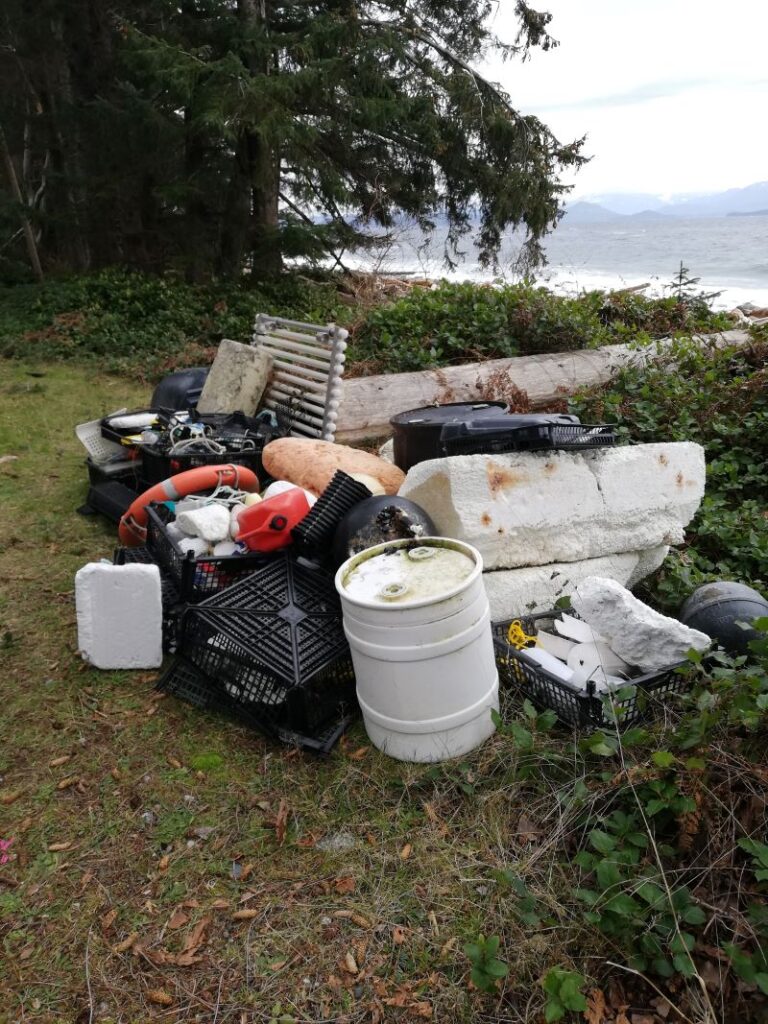 Photo by Quadra Island Beach Clean Dream Team
Situated at the northern end of the Salish Sea, just above where B.C.’s flood tides converge near Mitlenatch Island, Quadra receives a disproportionate amount of marine debris. Tides and wind patterns play a major role. Streams and rivers fed by storm drains and roadside ditches funnel heavy rains – and whatever they carry – into the ocean.
If garbage escapes onto city streets, it is already in the environment and often on its way to the sea. Vancouver, for example, hopes to complete stormwater filtration upgrades by 2050. What about all the other cities and towns?
Quadra Island’s eastern shoreline is particularly vulnerable. From Cape Mudge and Francisco Point to Rebecca Spit Provincial Park, Hyacinthe Bay, Open Bay and Bold Bay, debris collects on our rugged shores, where it is ground into smaller and smaller pieces. We have found items indicating sources as far away as Bellingham, Vancouver, Bowen Island, Ladysmith, Baynes Sound and Nanaimo – including a large garbage bin.
Unprotected foam is among the worst offenders. Large pieces can quickly break down into microplastics, making cleanup difficult, if not impossible. Washington state has banned the use of unprotected foam in aquatic environments unless encased in at least one-eighth-inch hard plastic or metal. Despite petitions to Ottawa, Canada has yet to follow suit.
Even protected foam flotation cubes are not immune. When they escape, they are battered open on Quadra’s shores. Why are air chambers not more widely used for dock flotation?
There is some good news. Communities such as Pender Harbour are offering grants to replace raw foam with encased flotation cubes – an important step forward in British Columbia.
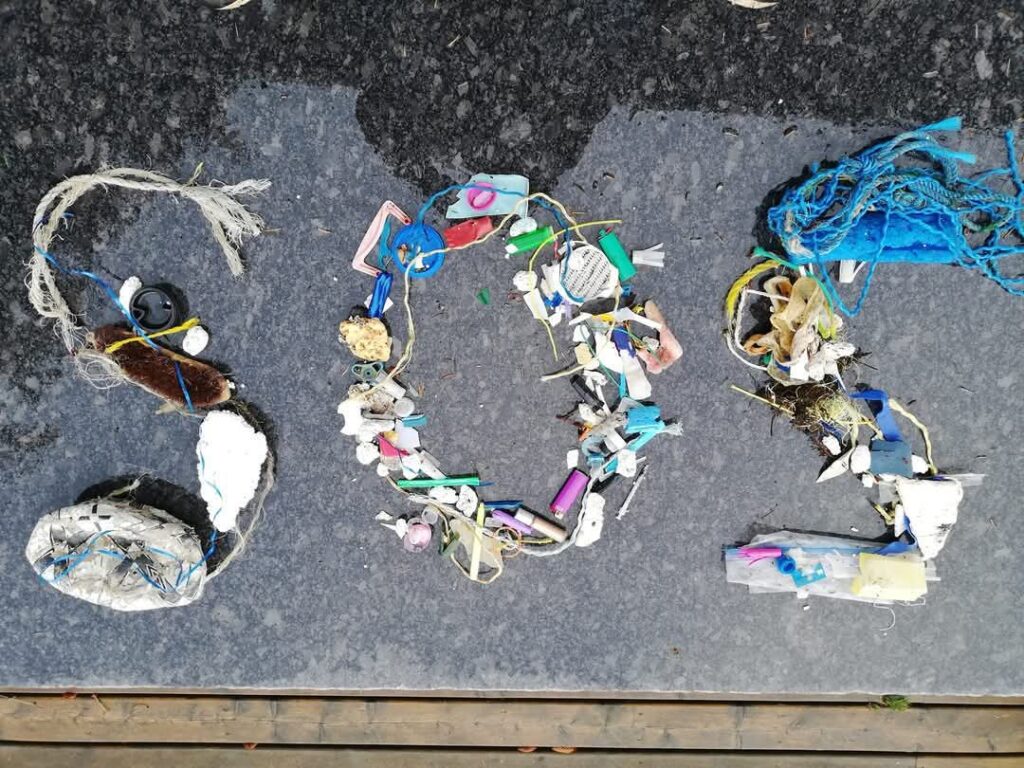 Photo by Quadra Island Beach Clean Dream Team
A Growing Problem With Limited Resources
How does a small group manage such an overwhelming problem? The short answer is that we cannot – at least not alone.
My wife, Heather, and I began cleaning beaches on our own, hauling what we collected to the Campbell River landfill at our own expense. Later, we learned about free tipping permits through Comox Valley Waste Management, though ferry fares and fuel costs remained out of pocket.
The collapse of the Sierra Club International’s Earth Day beach cleanup on Quadra was a major disappointment. Then COVID-19 added another layer of frustration, with discarded masks and gloves appearing in parking lots and public spaces. It often felt like environmental concern had slipped down the priority list.
Determined to do more, I created a Facebook group: the Quadra Island Beach Clean Dream Team. Growth was slow at first, but today the group has more than 340 members – some local, some not, and some not even in B.C. A core group of six to eight people regularly participates in cleanup hikes.
Our motto – Do what you can, where you can, when you can – resonated. Stash piles of collected debris began appearing at trailheads and beach access points.
We schedule cleanup hikes after the winter southeast storms, focusing on Wednesdays in March, April and May. We start close to home and venture farther as conditions improve, packing in large “super sacks” that are filled and left above the high-tide line for later boat retrieval. Turnout ranges from two to 12 people, sometimes with dogs in tow.
The work is not easy. Quadra’s coastline is rugged, with rock, logs and driftwood underfoot. Debris is often tangled beneath logs or driven into the forest by wind and waves. Much of it breaks down into microplastics that contaminate soil and foreshore areas, where it can be consumed by wildlife.
The biggest challenge is convincing people to return again and again, knowing the next tide will bring more debris.
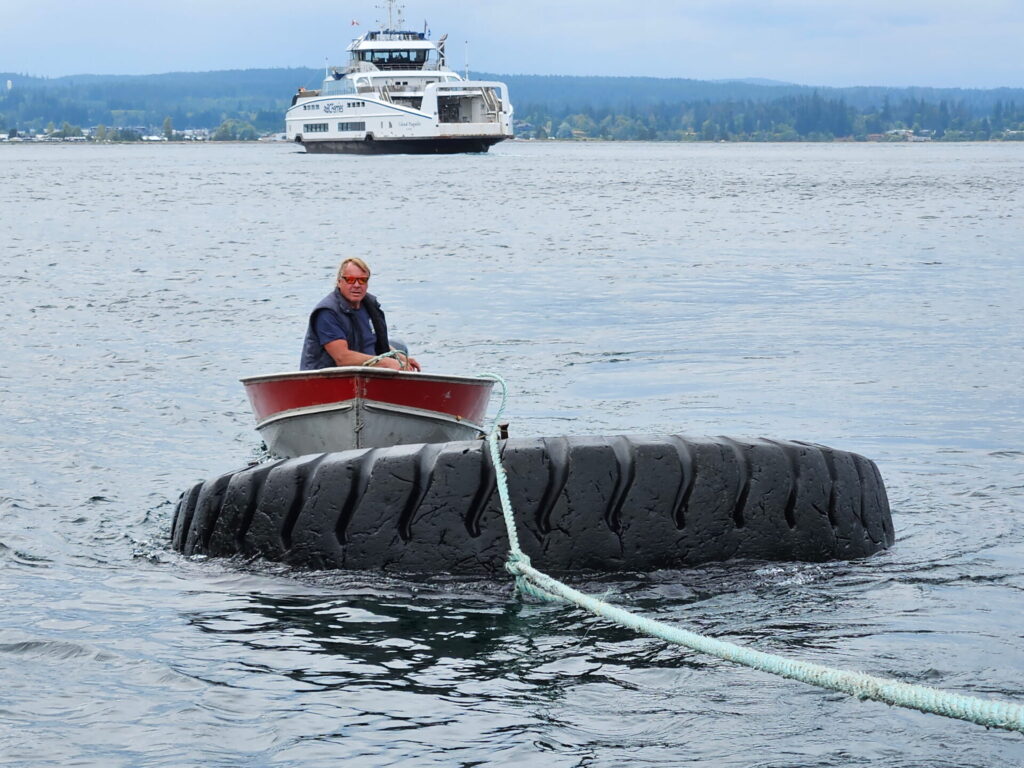 Photo by Quadra Island Beach Clean Dream Team
A Personal Connection
My family’s history on Quadra Island dates back to 1969, when I was eight years old and exploring the eastern shoreline near a small cabin my parents built. There was plenty of driftwood then, but very little garbage – occasionally a soap or bleach bottle.
Plastic, though invented earlier, only became widespread in the 1960s and ’70s. Today, it is difficult to find products without it. While plastic has many benefits, it should never be allowed to enter the environment once its useful life ends.
In 2012, Heather and I retired from Vancouver and moved to Quadra full time, ending my career as a Vancouver Fire Department captain. When calls came in, we responded. It feels as though our oceans have been calling for decades, with limited response from authorities.
Some COVID-19 relief funding supported commercial coastal cleanup projects, but our volunteer group did not qualify. We were fortunate to receive small grants from the Campbell River Community Foundation and, in 2025, the Quadra Island Community Foundation.
We also receive support from Quadra’s two True Value grocery stores, where customers can donate loyalty points to community groups. Those points help us provide food and drinks for volunteers during large cleanup events.
Comox Valley Waste Management has been instrumental, providing bins and coordinating transport, recycling and disposal. The Ocean Legacy Foundation supplies bins for recyclable materials sent to its Delta facility. We have been promised a permanent bin at Quadra’s new recycling centre, though progress has been slow. For the past four years, volunteers have stored collected debris on their own properties while waiting for bins to arrive each June.
A New Approach
To attract more participants, I introduced a fitness angle. Like ski runs, Quadra’s beaches range from beginner-friendly to “double black diamond.” Volunteers can build skills and confidence while helping the environment.
Our weekly Wednesday hikes run from March through June, with a major collection and trucking weekend in early June. In 2023, we tried adding a contest element, but participation did not increase and the added workload and expense proved discouraging.
Elsewhere, grassroots efforts are making a difference. In Campbell River, a local family-run business has successfully organized cleanup contests supported by multiple sponsors.
Boaters can also play a significant role by securing loose items and retrieving floating debris when possible. Yacht clubs could provide collection bags or bins and challenge other clubs to participate. Cortes Island already has an Ocean Legacy bin at its transfer station, and Desolation Sound would benefit greatly from similar efforts.
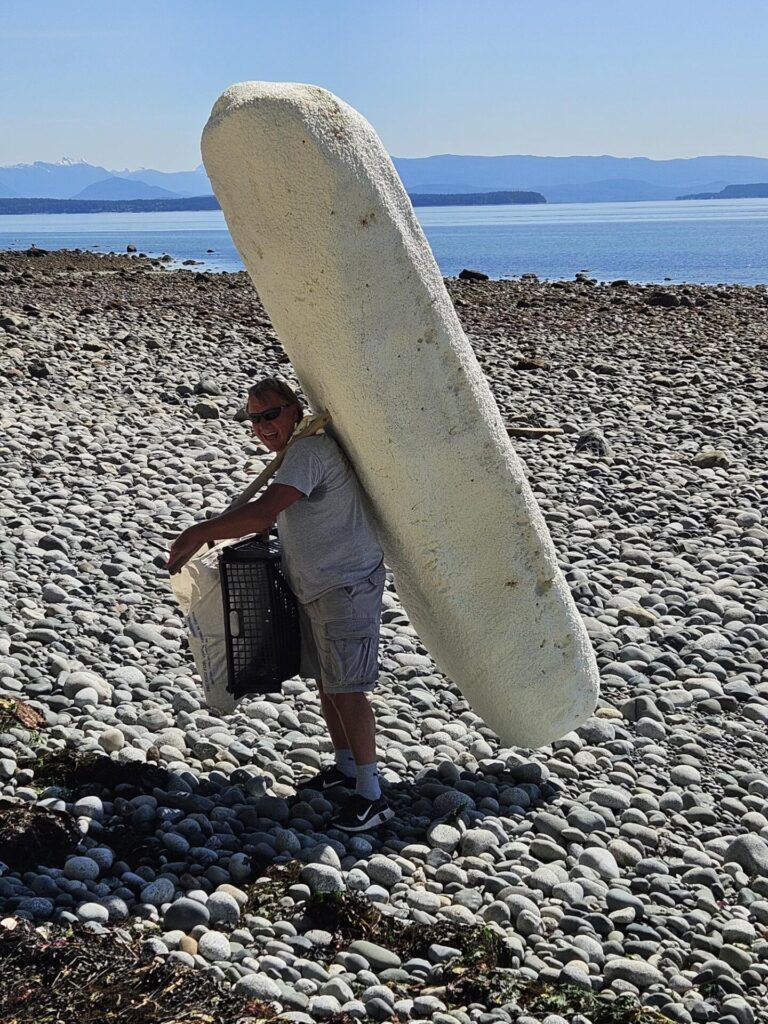 Photo by Quadra Island Beach Clean Dream Team
Accountability & Enforcement
I once believed most of Quadra’s marine debris originated elsewhere. The winter of 2024–25 proved otherwise. Six boats were sunk or wrecked during storms after breaking free from moorings or sinking at dock. One was deliberately burned after beaching. Some wrecks were removed by locals, but much debris remains.
Authorities and agencies were notified, but little action followed beyond phone calls and delayed emails. This pattern frustrates many islanders.
Marine debris is a global problem, but accountability starts locally. Governments collect fees for foreshore and water-lot leases from marinas and aquaculture operators. Are these sites adequately monitored to ensure environmental standards are met? Are inspections conducted below the surface?
Scientific studies using GPS drifters released near the Fraser River and elsewhere show debris pathways that frequently lead to Quadra’s eastern shores. While much funding has focused on oil-spill risk, marine debris continues to accumulate.
Another growing concern is creosote-treated pilings and lumber washing ashore. These materials leach toxic substances and are far beyond the capacity of volunteer groups to remove. Heavy equipment is required, raising questions about disposal practices and oversight.
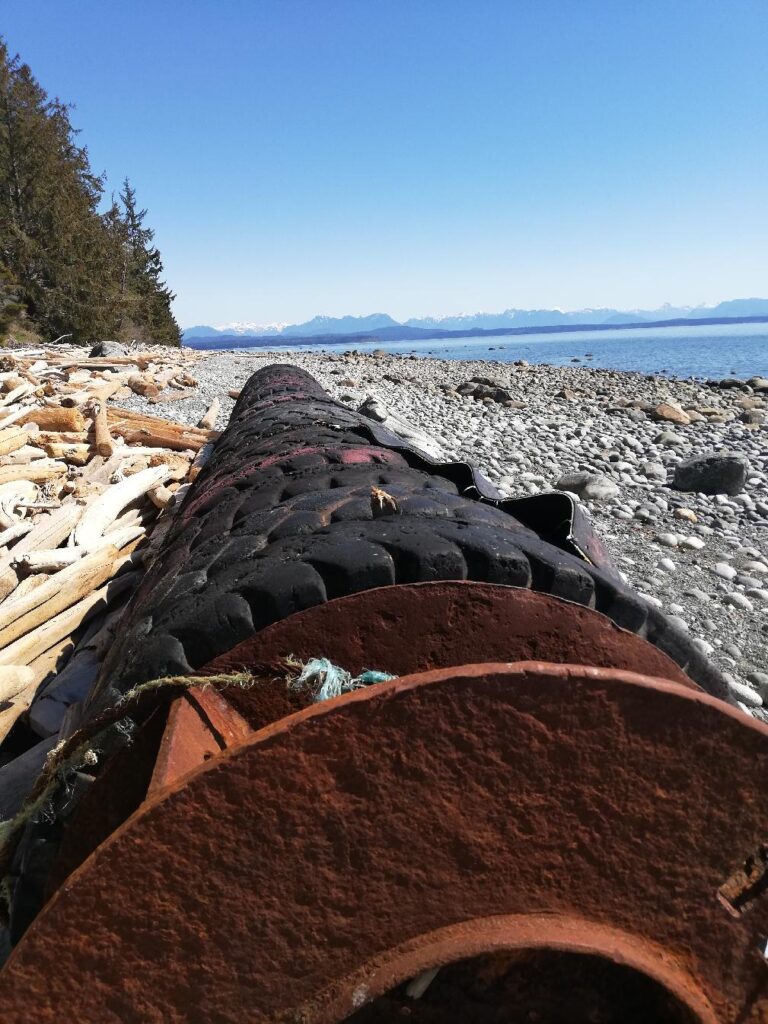 Photo by Quadra Island Beach Clean Dream Team
A Shared Responsibility
The solution starts with prevention. Do not pollute. Secure materials. Report violations.
If every person picked up just one piece of garbage a day – wherever they are – we would see change.
Do what you can, where you can, when you can.