
As wildfires burn across British Columbia during another hot, dry summer, some of the most fire-resistant places on the landscape may owe their survival to an unlikely ally.
In valleys and stream corridors throughout the province, beavers are quietly building pockets of resilience. Their dams slow moving water, spread it across floodplains and raise local water tables. The resulting wetlands can remain green after surrounding grasses, shrubs and forests have dried – creating refuges for wildlife and areas that burn less severely when fire arrives.
Beavers cannot extinguish a major wildfire or protect every nearby home. But research increasingly suggests that the wet landscapes they create can soften some of the effects of drought and fire.
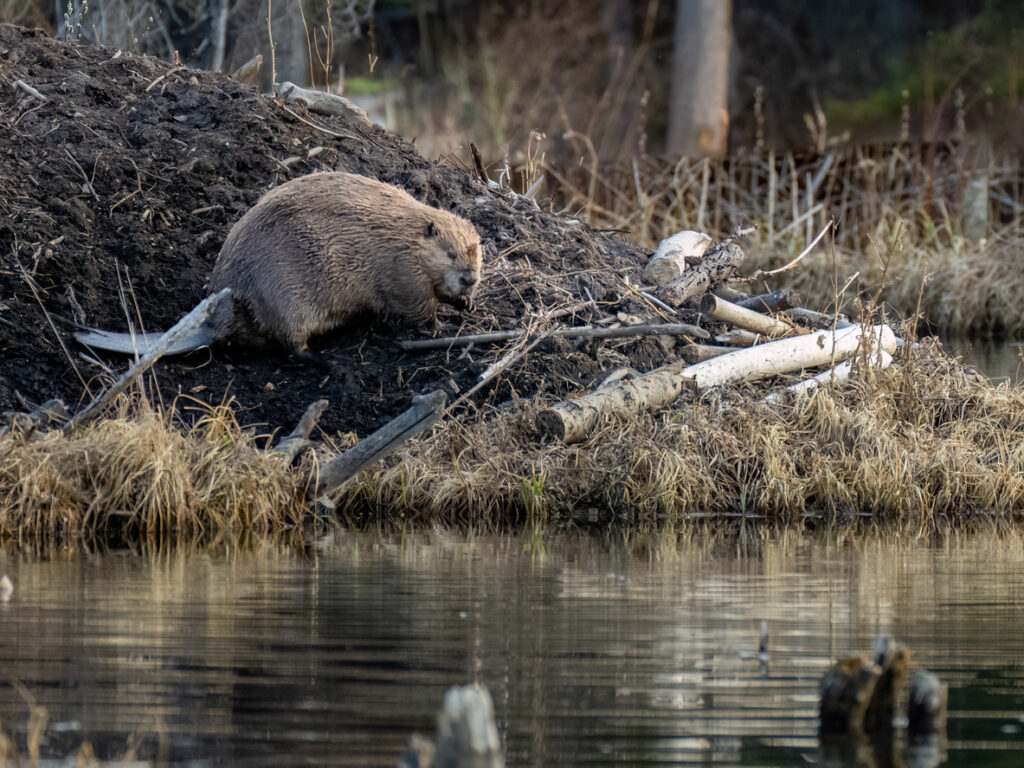 Photo by iStock
Holding Water On The Land
A beaver dam changes more than the small pond visible on the surface.
By slowing a stream, the dam gives water time to move sideways across the floodplain and downward into the soil. Sediment accumulates, channels become more complex and the local water table may rise. Instead of rushing downstream during the spring freshet, some water remains stored in ponds, saturated soil and groundwater.
That stored moisture can help sustain streamflow and wetland vegetation later in the summer, when rainfall is scarce and smaller waterways might otherwise shrink or disappear.
A 2022 global review examined 44 studies concerning beaver dams and water retention. Of those, 42 reported increased water storage behind the dams. Other research has found that the effects can extend beyond an individual pond as water spreads through side channels, wetlands and surrounding soils.
In a drought-prone landscape, that difference matters. A stream bordered by dry grass and shrubs can become a pathway for fire. A wider, saturated wetland filled with green vegetation is less receptive to burning.
Green Refuges Amid The Flames
In a widely cited 2020 study, researchers used satellite imagery to compare beaver-dammed stream corridors with similar waterways that had no beaver activity. The study covered five large wildfires in the western United States.
The beaver-influenced areas stayed greener during the fires, even when the surrounding landscape burned. Researchers concluded that beaver activity played a significant role in creating fire-resistant patches along stream corridors.
More recent research examined beaver-modified waterways during three megafires in the Rocky Mountain region. It similarly found lower burn severity in riverscapes with beaver dams than in comparable areas without them.
The benefit appears to extend beyond open water. A single colony may build several dams and dig canals through its territory, distributing water across a much larger area than the pond alone would suggest. Saturated soils and moisture-rich plants can create what researchers call a fire refugium – a place where the effects of fire are less severe and where wildlife may find temporary shelter.
Fish, amphibians, reptiles and small mammals can all benefit from these wet pockets. After the fire has passed, surviving vegetation may also provide a starting point for the wider ecosystem’s recovery.
The dams can continue helping after a fire. When rain falls on burned slopes, water can carry large quantities of ash, soil and debris into streams. Beaver ponds slow that flow and capture some of the sediment before it travels farther downstream.
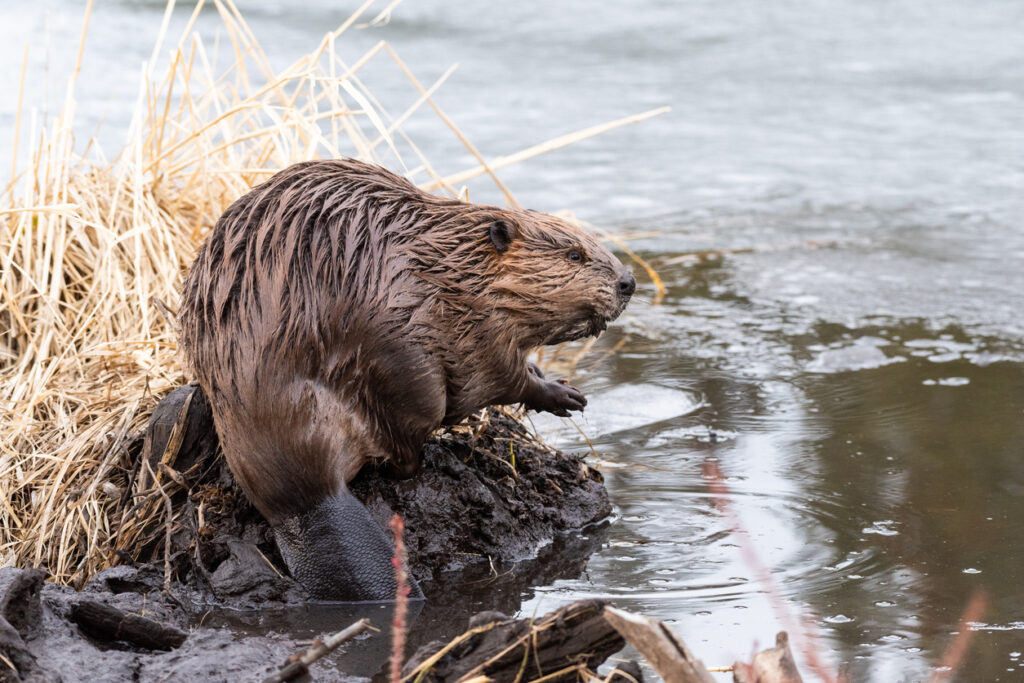 Photo by iStock
Rebuilding Wetlands The Beaver Way
Restoration groups in BC are increasingly trying to reproduce these natural processes, sometimes before beavers themselves return.
The BC Wildlife Federation launched its 10,000 Wetlands Initiative in 2023. Working with First Nations, environmental organizations, government bodies and landowners, the initiative uses low-tech structures to slow water and reconnect streams with their floodplains.
One of its main tools is the Beaver Dam Analogue, commonly called a BDA. Built by hand from posts, branches, mud and other locally available materials, a BDA partially spans a small stream and functions much like a natural dam. Water slows, stream levels rise gently and moisture begins spreading into adjacent soils.
The goal is not simply to create a pond. It is to restart the processes that allow a wetland system to form and, where conditions are suitable, encourage beavers to eventually take over its maintenance.
The initiative exceeded its original target of 100 Beaver Dam Analogues in 2025 and has moved into a second, multi-year phase. At Voght Creek near Merritt, for example, the federation worked with the Nooaitch and Lower Nicola Indian bands to install nine BDAs in 2024. A year later, water was reconnecting with the floodplain, vegetation was returning and new wildlife habitat was forming.
Elsewhere, beavers have already accepted the invitation. When the project team revisited Earl Ranch one year after installing 10 analogues, it found peeled branches, fresh mud and pooled water – evidence that beavers had returned and begun adding their own work to the human-built structures.
Not Welcome Everywhere
The same abilities that make beavers valuable ecosystem engineers can bring them into direct conflict with people.
Beavers do not distinguish between a remote creek and a drainage channel beside a road. A dammed culvert can flood pavement, undermine a roadbed or back water onto agricultural land. Rising ponds can affect homes, wells and septic systems, while the loss of ornamental or valuable trees can frustrate property owners.
These are real concerns, particularly in developed valleys where roads, farms and communities occupy former floodplains.
Removing a dam may provide immediate relief, but it does not always solve the underlying problem. If the location still offers food, water and shelter, the beavers – or another colony – may rebuild. In some situations, repeated dam removal can become a costly cycle.
Coexistence tools offer an alternative where the site permits. Pond-levelling pipes can move water through a dam while maintaining an acceptable pond height. Fences placed around culvert entrances make the constricted opening harder for beavers to block, while allowing water to continue flowing. Wire mesh can protect individual trees without removing the animals responsible for maintaining the surrounding wetland.
Not every conflict can be resolved this way, and any in-stream work may require professional guidance and regulatory approval. Restoration projects must also be carefully located. A beaver-inspired structure that helps re-wet a remote headwater stream could create unacceptable risks if placed near a road, building or productive field.
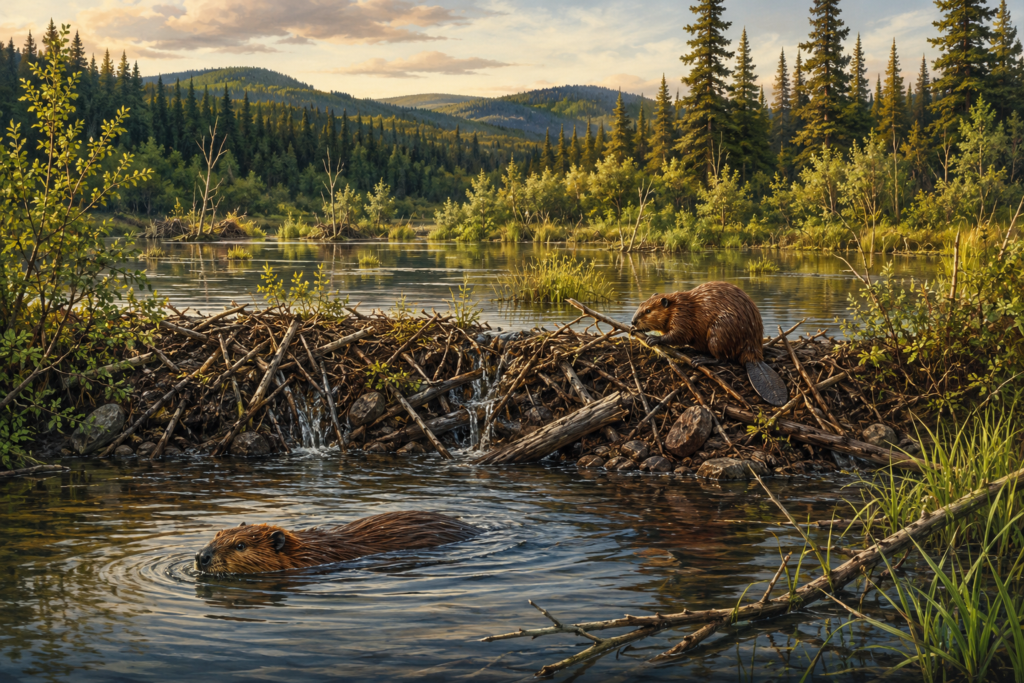 Illustration Created Using OpenAI
One Piece Of A Larger Response
Beaver wetlands are not a replacement for wildfire response, prescribed fire, forest management or work to make homes and communities more resistant to fire. Their influence is generally concentrated around waterways, and extreme fire can still burn through wet areas under severe conditions.
What they offer is another layer of resilience.
A healthy landscape does not depend on a single line of defence. It contains forests of different ages, functioning floodplains, intact wetlands and streams that retain water well into the dry season. Beavers help create that variety – one dam, channel and flooded meadow at a time.
As BC confronts longer droughts and increasingly destructive wildfires, allowing water to remain on the land may be one of the most important forms of preparation. In the right places, beavers have been doing exactly that for thousands of years.