A new moon will create ideal conditions for watching one of the year’s brightest and most reliable meteor showers.
For a few nights each August, some of the best sightseeing in British Columbia happens after dark.
The annual Perseid meteor shower will reach its peak overnight from Aug. 12 to 13, sending bright streaks of light across the sky. With the peak coinciding with a new moon this year, little moonlight will interfere with the show, making 2026 an especially promising year to watch.
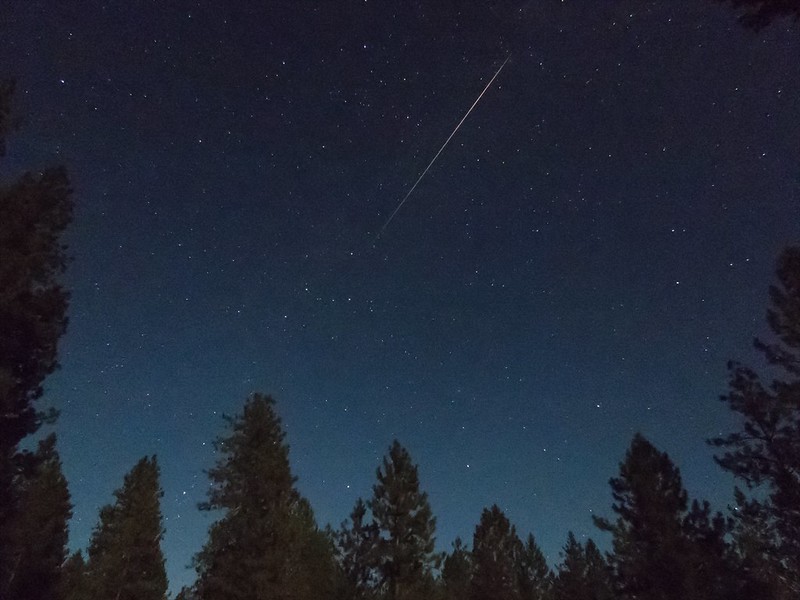 Photo by Flickr/Rocky Raybell
The Perseids are among the most popular meteor showers of the year. They arrive during warm summer weather, can be seen without special equipment and are known for producing fast, bright meteors – including occasional fireballs that may leave glowing trails behind them.
Under exceptionally dark, clear skies, observers could see dozens of meteors per hour during the peak. The exact number will depend on cloud cover, light pollution and viewing conditions.
What Causes The Perseids?
Although they are often called shooting stars, meteors are not stars at all.
The Perseid meteor shower occurs when Earth travels through a trail of dust and debris left behind by Comet 109P/Swift-Tuttle. As those small particles enter Earth’s atmosphere at high speed, they heat up and disintegrate, producing the flashes of light visible from the ground.
Perseid meteors travel at approximately 59 kilometres per second, according to NASA. Many are no larger than a grain of sand.
The shower takes its name from the constellation Perseus. If their paths were traced backward across the sky, the meteors would appear to originate from a point near the constellation. This apparent point of origin is known as the radiant.
There is no need to find Perseus to enjoy the display, however. Meteors can appear anywhere in the sky, and concentrating only on the radiant can mean missing some of the shower’s longest and most impressive trails.
Observations of the Perseids date back more than 2,000 years, making it one of the oldest recorded meteor showers.
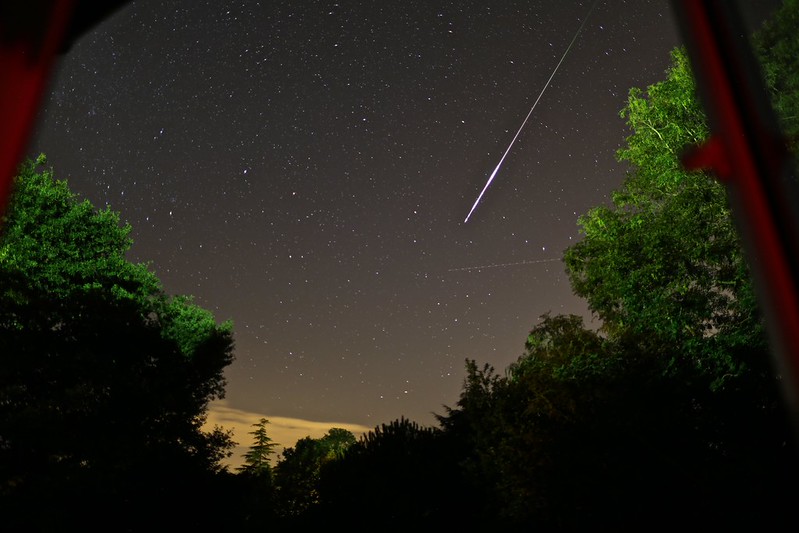 Photo by Flickr/Paul Williams
When To Watch In BC
The shower will peak during the night of Wednesday, Aug. 12, and into the early hours of Thursday, Aug. 13.
Meteors may become visible once the sky is fully dark, but viewing generally improves later in the night as the radiant climbs higher. The hours after midnight and before dawn usually offer the greatest activity.
A new moon arrives Aug. 12, leaving the sky unusually dark during the shower’s peak. Unlike years when bright moonlight washes out fainter meteors, 2026 should offer favourable conditions – provided clouds and wildfire smoke do not obscure the view.
The Perseids are active for much longer than a single night. Meteors from the shower can be seen from mid-July through much of August, although activity drops away from the peak. Anyone who cannot get outside Aug. 12 may still see Perseids during the nights immediately before and after it.
Where To Watch
The best viewing location is not necessarily a famous lookout or remote mountaintop. Any safe, legally accessible place with a wide view of the sky and as little artificial light as possible can work.
Several BC locations are particularly well suited to stargazing.
Cattle Point, Oak Bay: Located along the waterfront near Victoria, Cattle Point is one of only two Urban Star Parks recognized by the Royal Astronomical Society of Canada. Artificial lighting is carefully controlled, while neighbouring Uplands Park helps buffer the site from some of Greater Victoria’s light.
McDonald Park, Abbotsford: This small dark-sky site beside the Sumas River is protected from some surrounding light by Sumas Mountain. Light pollution from development and greenhouses has affected the site over time, but it remains a recognized stargazing location within reach of the Lower Mainland.
Johns Family Nature Conservancy Regional Park, Central Okanagan: Situated south of Kelowna, the park was designated a Nocturnal Preserve in 2023. The designation recognizes both the quality of its night sky and the ecological importance of protecting darkness for nocturnal wildlife. The Regional District of Central Okanagan’s summer programming includes a Perseid meteor shower watch.
Mount Kobau, South Okanagan: The summit of Mount Kobau, within the South Okanagan Grasslands Protected Area, is considered one of Canada’s premier astronomy locations. Its elevation and dark Interior skies have long attracted astronomers. The mountain is reached by a rough gravel road, so visitors should check current road, park and wildfire conditions and ensure their vehicle is suitable before travelling.
BC’s provincial and national park campgrounds: Campers in places such as Manning Park, Kokanee Creek Provincial Park and the mountain parks of southeastern BC may also find excellent dark skies away from large communities. Staying overnight avoids the risks associated with driving long distances immediately after several hours of late-night viewing.
Away from southern BC, rural areas of the Cariboo, Chilcotin, Kootenays and northern BC offer some of the province’s darkest skies. A quiet lake, campground or open rural property may provide a better view than a busy, well-known lookout.
Before heading out, confirm that the chosen site permits nighttime access. Day-use areas may close at night, and vehicles left after closing can be ticketed or towed.
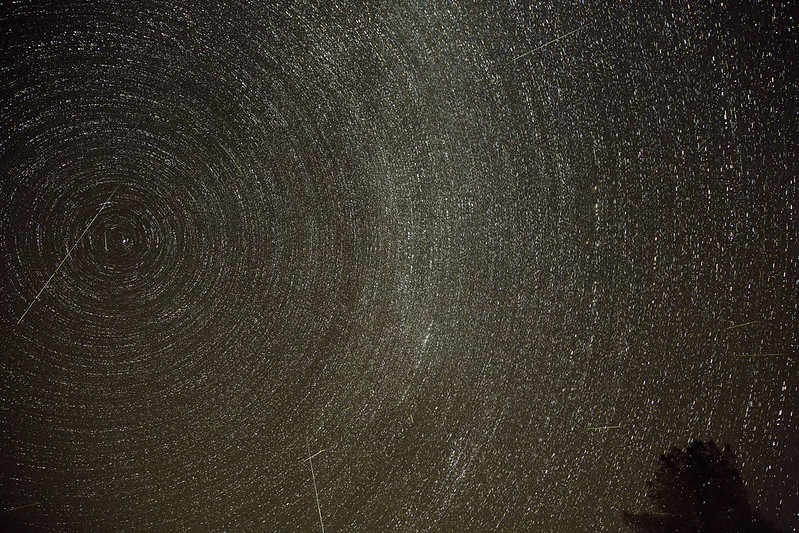 Photo by Flickr/Steve Ryan
How To Get The Best View
No telescope or binoculars are required. In fact, both restrict the field of vision and can make meteors harder to spot.
Find an open area away from streetlights, vehicle headlights and illuminated buildings. Lie back in a reclining chair or on a blanket and take in as much of the sky as possible. Looking roughly northeast may help earlier in the evening as Perseus rises, but meteors can travel across any part of the sky.
Allow at least 20 to 30 minutes for your eyes to adjust to the darkness. Avoid checking a bright phone screen during that time. If light is needed, a red flashlight or headlamp will interfere less with night vision.
Bring warm layers, even if the day has been hot. Temperatures can drop significantly overnight, particularly at higher elevations. A blanket, chair, hot drink and insect repellent can make a long viewing session much more comfortable.
Meteor showers are unpredictable. Several meteors may appear within minutes, followed by a quiet stretch. Plan to remain outside for at least an hour rather than expecting a continuous display.
August is also wildfire season in BC. Check current evacuation notices, road conditions, park advisories, fire restrictions and air-quality information before travelling. Never park on dry vegetation or block a roadway, and do not enter closed or restricted areas in search of a darker view.
Then turn off the lights, settle in and wait. On a clear night, the reward may be a bright piece of comet dust tracing its final path across the BC sky.