
By early March, British Columbia is in transition. Snow still blankets the mountains, but at sea level buds begin to swell, migratory birds return and longer days pull people back outside. For locals and visitors alike, it is one of the province’s most dynamic — and underrated — seasons.
Here’s where to watch winter loosen its grip and spring take hold.
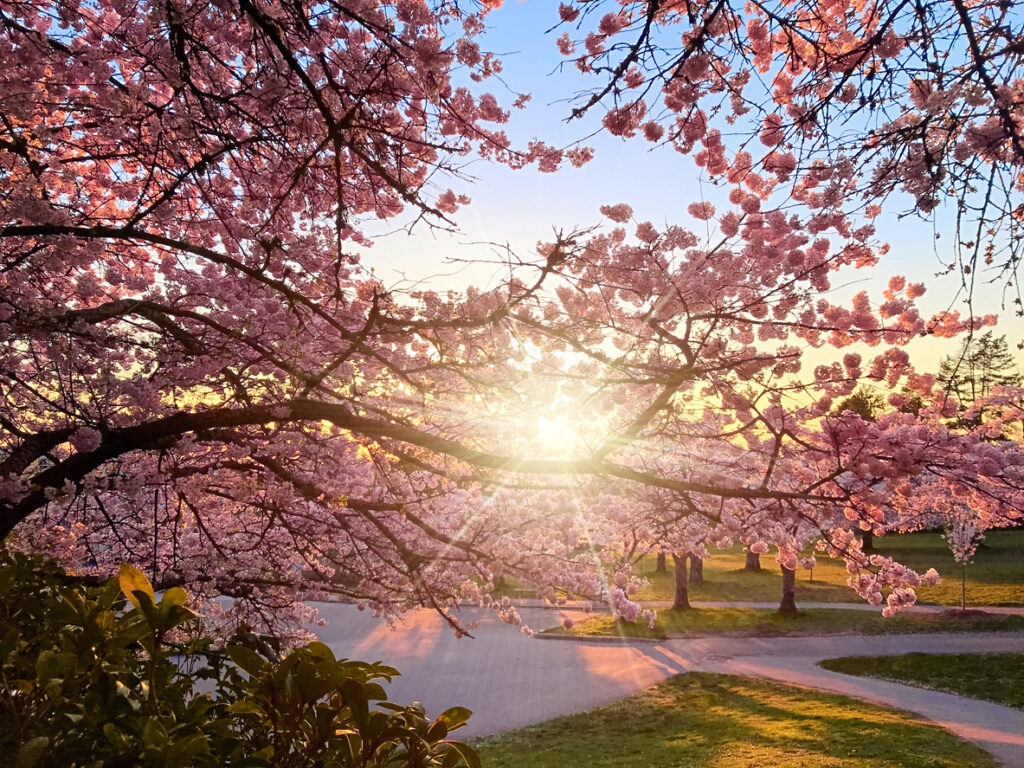 Photo by iStock
Vancouver’s Cherry Blossoms
In much of southern British Columbia, spring announces itself in pink.
Vancouver is home to more than 40,000 ornamental cherry trees, most of them planted after the Second World War. Depending on the variety and the weather, blossoms typically begin appearing in late February and peak through March and April.
Neighbourhoods such as the West End, Kitsilano and Mount Pleasant light up first, followed by parks, including Stanley Park and Queen Elizabeth Park. Bloom timing shifts annually with temperature patterns, making each season slightly different. Mild winters can bring earlier blossoms, while cooler conditions delay peak colour.
For photographers and walkers, early morning offers the softest light and the quietest streets.
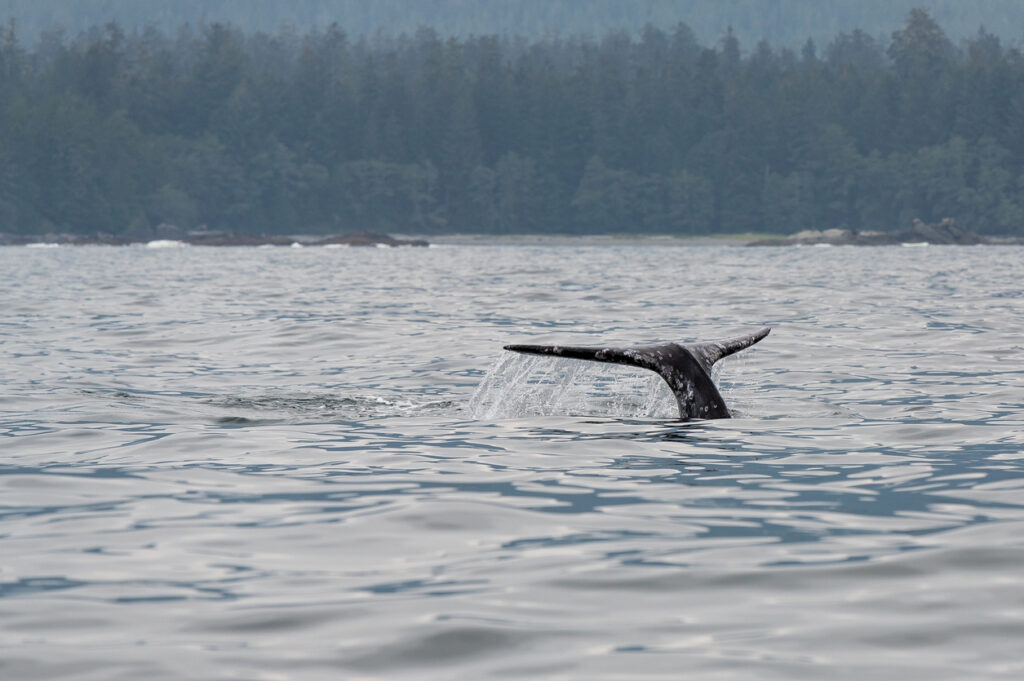 Photo by iStock
The Grey Whale Migration
Off the west coast of Vancouver Island, spring is marked not by flowers but by fins.
Each year, thousands of Pacific grey whales migrate from breeding lagoons in Mexico to feeding grounds in the Bering and Chukchi seas. The northbound migration typically passes British Columbia’s outer coast from March through May.
Communities such as Tofino and Ucluelet operate whale-watching tours throughout the season, with peak viewing often occurring in late March and April. The coastline of Pacific Rim National Park Reserve offers shore-based viewing opportunities, particularly on clear days when whales can sometimes be seen spouting offshore.
The shoulder season means fewer visitors than summer and a wilder, wind-swept landscape as winter storms give way to calmer conditions.
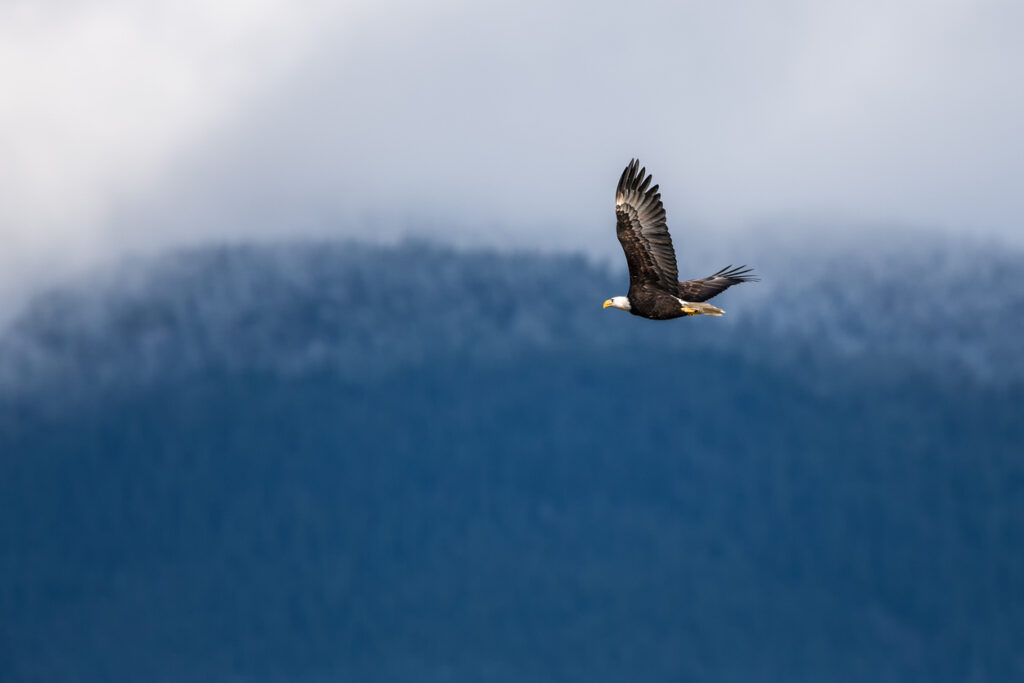 Photo by iStock
Eagles & Early Wildlife Movement
Late winter and early spring also mark the tail end of one of North America’s largest bald eagle gatherings.
Near Squamish, the community of Brackendale hosts thousands of bald eagles each winter, drawn by salmon runs along the Squamish and Cheakamus rivers. Numbers typically peak between December and January, then gradually decline through February and March as birds disperse to breeding territories.
Across the province, ungulates begin shifting with the season. Deer and elk move toward lower-elevation forage as snow recedes. In the Kootenay region and parts of the Interior, warming temperatures signal the start of seasonal wildlife movement that continues through April.
Spring wildlife viewing requires patience and distance. Animals are emerging from winter’s energy deficit and can be particularly sensitive to disturbance.
Storm Season Softens On The Coast
On the outer coast, March and April sit between storm-watching season and summer tourism.
In Tofino and Ucluelet, winds begin to ease and daylight stretches longer into the evening. The Wild Pacific Trail near Ucluelet offers clifftop views of a changing Pacific — still dramatic, but increasingly calm between weather systems.
Wildflowers start to appear in sheltered areas, and beach walks along Long Beach in Pacific Rim National Park Reserve feel expansive and quiet compared with peak summer months.
For travellers seeking a reflective coastal experience without heavy crowds, early spring can be ideal.
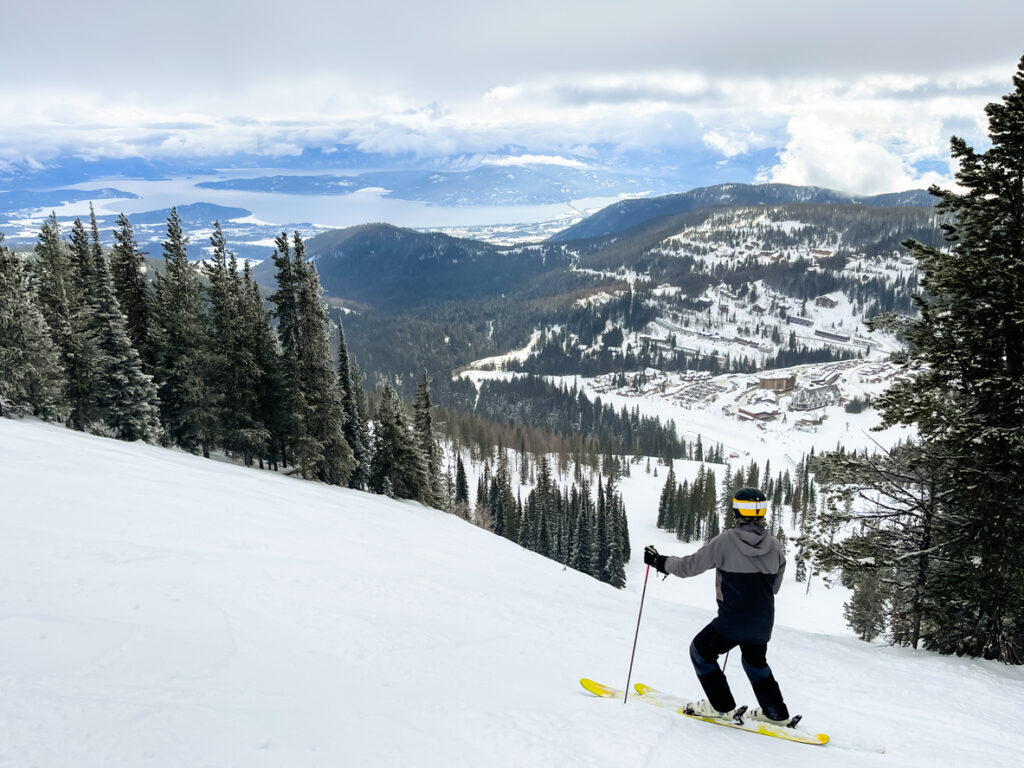 Photo by iStock
Spring Skiing In The Mountains
While valleys warm, higher elevations remain firmly in winter mode.
Whistler Blackcomb typically operates into April, with glacier skiing often extending later depending on conditions. Spring skiing is known for clear days following overnight snowfall, as well as softer afternoon snow and lively village patios.
The contrast is part of British Columbia’s appeal: it is possible to ski in the morning and stroll beneath flowering trees in the city the same day.
A Season Of Transition
Spring in British Columbia is less about a single dramatic moment and more about gradual change. Snowlines retreat. Migratory birds return. Blossoms fall as quickly as they appear.
For residents emerging from winter and visitors planning shoulder-season travel, March and April offer a window into the province in motion — quieter than summer, but alive with subtle signs that a new season has begun.