
A bottle of water may look perfectly clear, yet pour enough of it into a deep basin and the result can appear intensely blue. Add finely ground rock, dissolved plant matter, microscopic algae or certain minerals, and a lake can become turquoise, emerald green, golden brown or nearly black.
British Columbia’s varied geology, glaciers, forests and climate create an especially broad palette. Although weather and light affect how a lake looks from shore, much of its colour is determined by what the water absorbs, what it reflects and what is floating or dissolved within it.
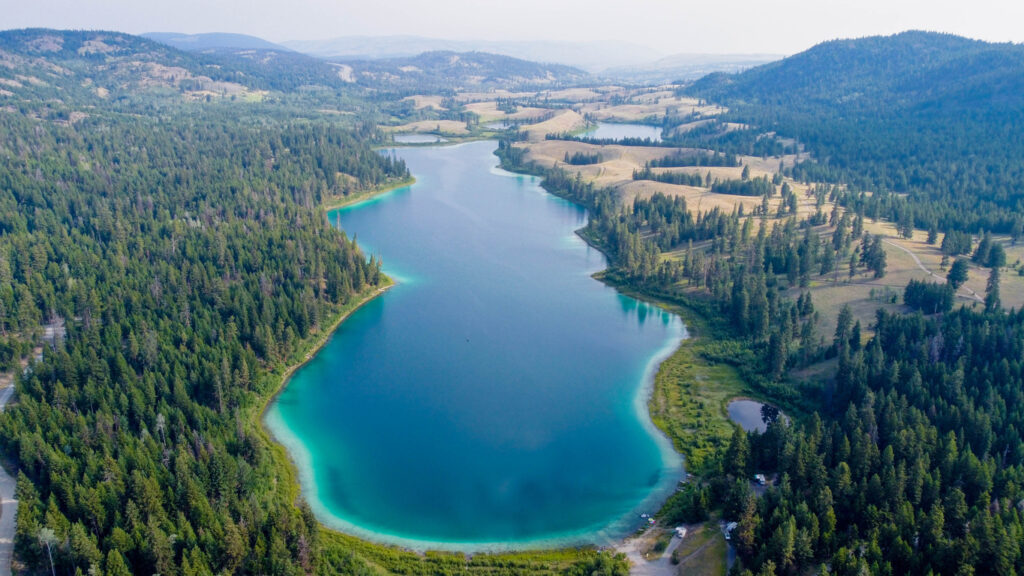 Photo by iStock
Deep Water, Deep Blue
Clear, deep water naturally appears blue because water absorbs different wavelengths of light at different rates. Longer wavelengths, including red light, are absorbed relatively quickly, while shorter blue wavelengths travel farther through the water and are more likely to return to our eyes. The effect is most noticeable in deep water with relatively little sediment, algae or dissolved organic material.
That is why a lake may look pale or transparent along a shallow shoreline but become increasingly dark blue farther from land. Depth is not the only factor, however. Once particles or dissolved substances enter the water, they change how light is absorbed and scattered – and the lake begins to take on a different colour.
Turquoise Made From Stone
Some of BC’s most photographed lakes owe their brilliant turquoise colour to glaciers.
As a glacier moves, rocks embedded in the ice grind against the bedrock below, producing an extremely fine powder known as glacial flour or rock flour. Meltwater carries those particles into streams and lakes. Because the grains are so small, they can remain suspended rather than immediately sinking to the bottom.
When sunlight enters the lake, the suspended particles scatter light, producing the milky blue-green colour associated with glacier-fed water. The exact shade depends partly on the amount and type of sediment present, as well as the lake’s depth and surrounding light conditions.
At Joffre Lakes Park, for example, BC Parks attributes the saturated turquoise-blue water of the three lakes to glacial silt suspended in the water.
The amount of rock flour entering a lake can also change during the year. Warmer weather may increase glacial melt and the flow of sediment-bearing water, while some particles gradually settle during quieter periods. A glacier-fed lake’s colour is therefore not necessarily fixed.
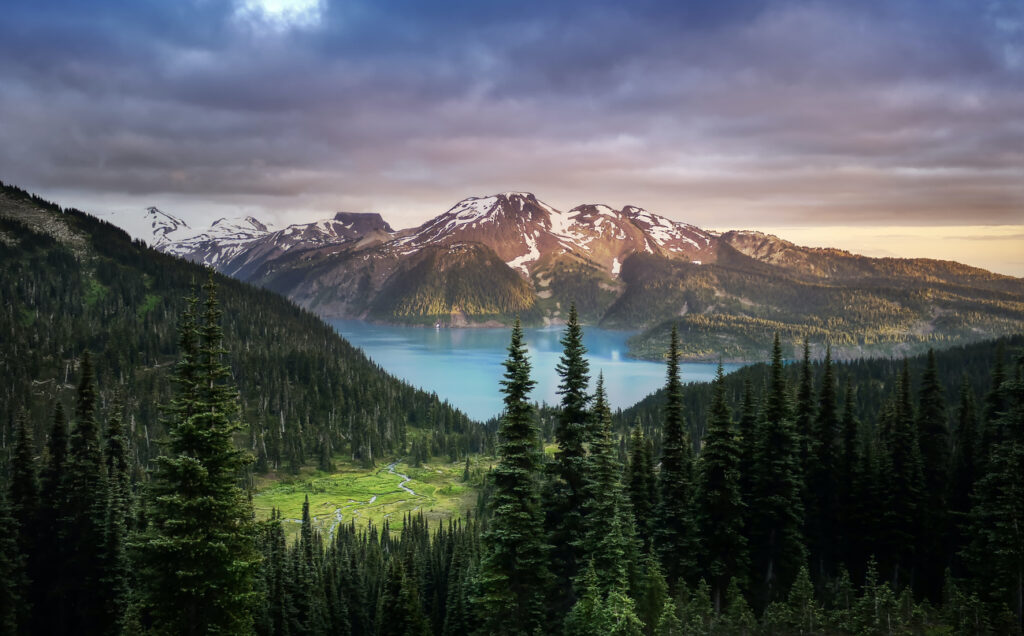 Turquoise waters in Garibaldi Lake. Photo by iStock
Kalamalka’s Changing Colours
Not every turquoise lake is coloured by a glacier. Kalamalka Lake, near Vernon, is a rare and striking example of a marl lake.
Its water contains dissolved calcium carbonate associated with limestone deposits left in the region after the retreat of the Fraser Glacier. As the lake warms, tiny calcium carbonate crystals called marl form in the water. Sunlight reflecting from these pale particles can shift the lake from dark blue-green to vivid turquoise or aquamarine.
The display changes as the season progresses. Marl forms more quickly in warmer water, but the crystals eventually sink into deeper water and stop reflecting as much light near the surface. That helps explain why Kalamalka can appear to change colour between visits – or even display different shades across the lake at the same time.
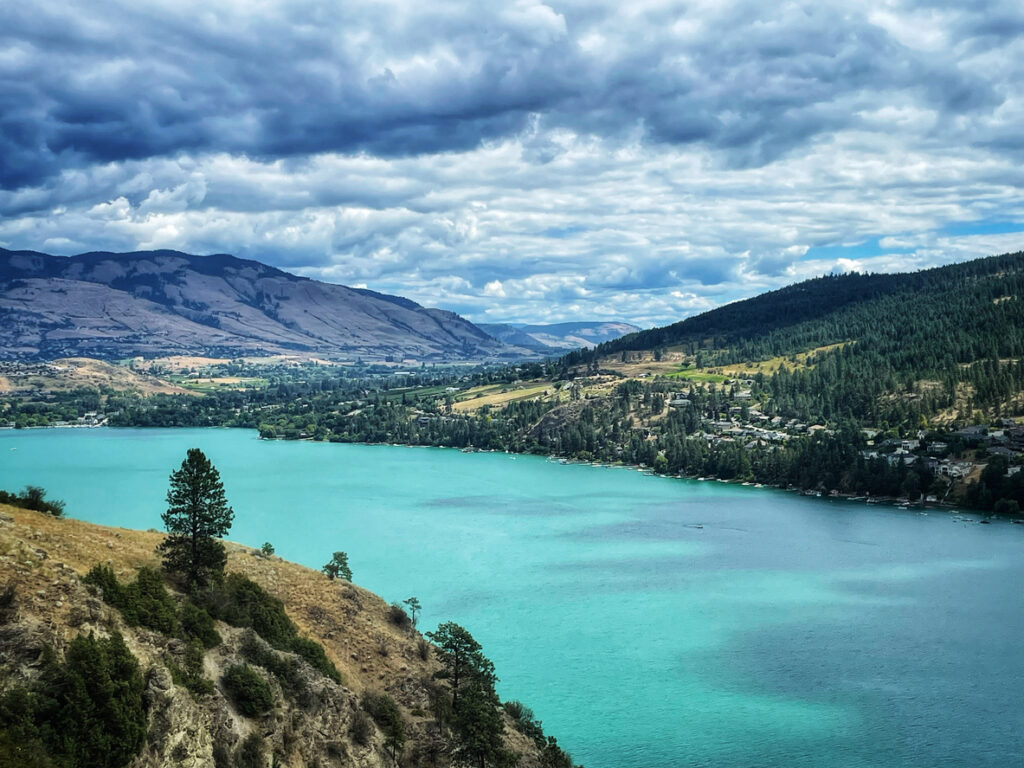 The changing waters of Kalamalka Lake. Photo by iStock
When A Lake Turns Green
Green water can have several explanations. Mineral particles may produce a green or blue-green cast, while shallow water can pick up colour from aquatic plants or the lake bottom. In other cases, microscopic algae and phytoplankton are responsible.
Algae are a natural and essential part of freshwater ecosystems, but under favourable combinations of nutrients, warmth, light and calm conditions, some species can multiply rapidly and form a visible bloom. BC’s blooms occur most often in late summer and early fall, although they can develop at other times of year.
A bloom may look green, blue-green, yellowish, brown or even red, depending on the organisms present. Colour alone cannot determine whether it is harmless. Harmful cyanobacteria can resemble ordinary green algae, and definitive identification requires microscopic analysis.
Tea-Coloured – But Not Necessarily Dirty
In forested and wetland landscapes, lakes and ponds sometimes appear amber, reddish-brown or almost black. This colour often comes from dissolved organic matter released as leaves, roots, peat and other plant material break down.
The effect is similar to steeping tea. Unlike suspended mud, which may eventually settle or be filtered out, these naturally dissolved compounds can continue colouring the water even when it is otherwise clear.
Dark water is therefore not automatically polluted or unhealthy. In some places, it is simply a reflection of the surrounding soils and vegetation. Suspended clay, silt and soil runoff can also produce brown, grey, yellow or reddish water, particularly after heavy rain or where waves disturb a shallow lake bottom.
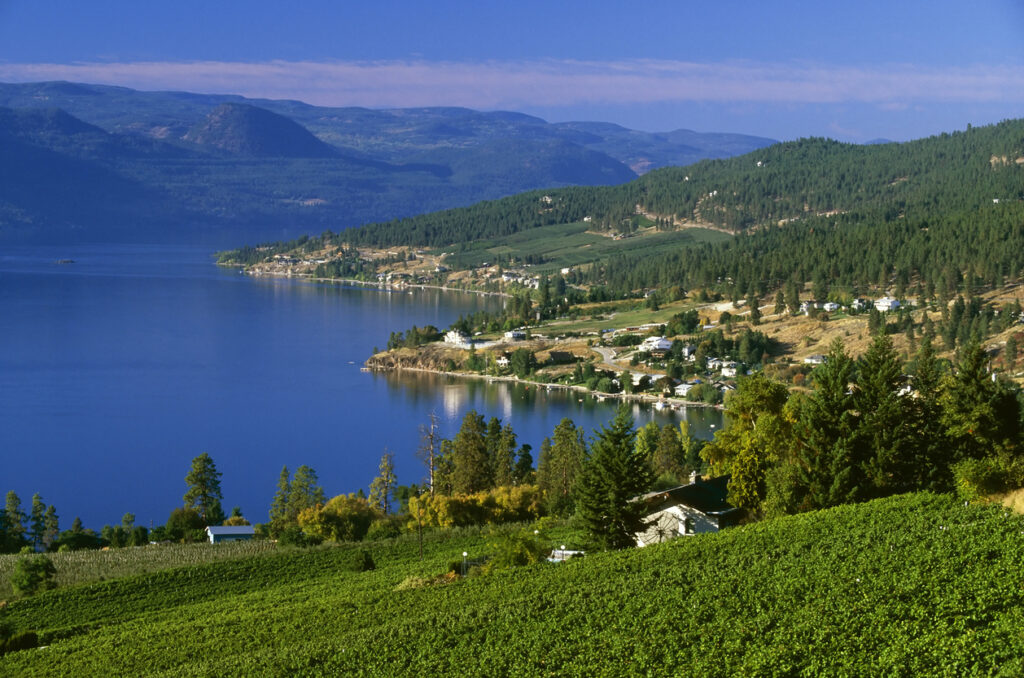 Photo by iStock
A Landscape Written In Water
A lake’s colour is not merely decorative. It can reveal the presence of glaciers, limestone, forest soils, microscopic life or recently disturbed sediment. It can also change as snow melts, glaciers release more water, summer temperatures rise, algae multiply or suspended particles settle.
Sometimes that transformation is part of a healthy natural cycle. At other times, a sudden surface scum, paint-like streak or dense green bloom warrants caution. The province advises people and pets to avoid water containing a suspected cyanobacteria bloom: when in doubt, stay out.
The next time a BC lake appears impossibly blue, unexpectedly green or as dark as steeped tea, look beyond the surface. Its colour may be telling the story of everything from moving ice and ancient limestone to the forest growing along its shore.