
The province of British Columbia is moving ahead with an ambitious long-term vision for outdoor recreation, announcing a new provincial strategy alongside nearly $1.5 million in funding for projects designed to strengthen recreation infrastructure, tourism and economic development in rural communities.
Called Look West: BC’s Outdoor Recreation Strategy, the plan outlines a co-ordinated approach to improving outdoor recreation opportunities throughout the province while addressing increasing pressures on parks, trails and recreation systems.
“Outdoor recreation is a defining part of life in BC, supporting people, their well-being and their communities. It also attracts visitors from around the world, bringing people to our businesses and sustaining jobs,” said Tamara Davidson, Minister of Environment and Parks. “This strategy helps strengthen how we deliver those opportunities throughout the province. It reflects a shared commitment to making outdoor experiences more accessible and enduring, because BC has so much to offer and explore.”
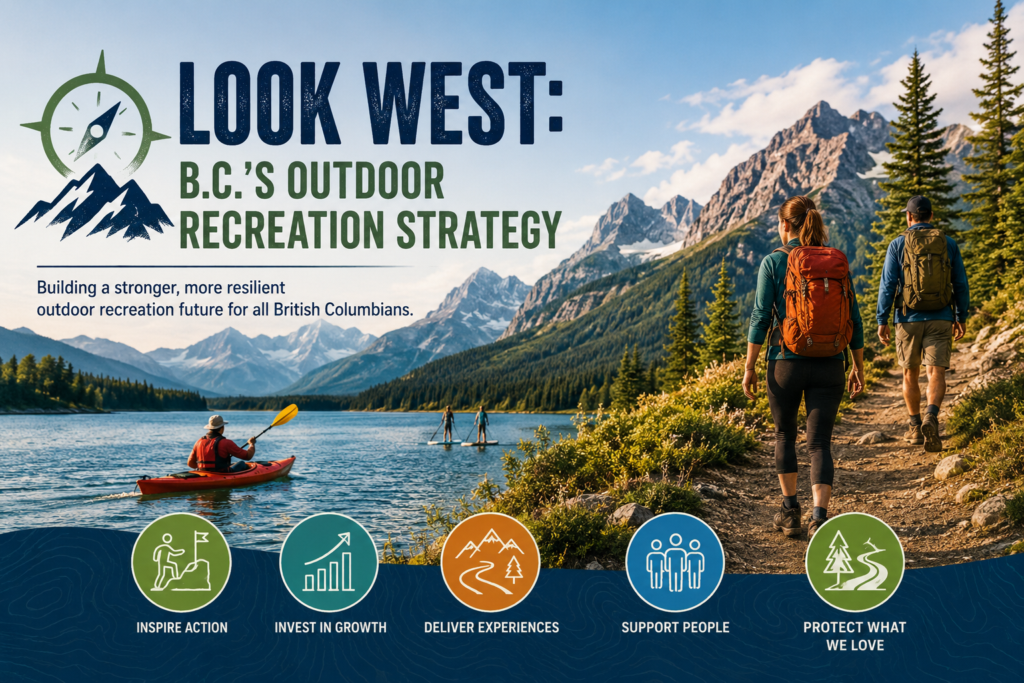 Illustration created using OpenAI
According to the province, outdoor recreation contributed $4.8 billion directly to BC’s economy in 2023 and supports more than 1,400 outdoor recreation and adventure tourism businesses across the province.
The strategy is organized around five key priorities: Inspire Action, Invest In Growth, Deliver Experiences, Support People and Protect What We Love. Provincial officials say the framework is intended to provide clearer direction for governments, recreation organizations and community partners working throughout the outdoor sector.
The plan also acknowledges mounting pressures facing outdoor recreation in British Columbia, including rising operational costs, climate impacts and increased visitation to parks and recreation sites.
Several initiatives connected to the strategy are already underway. The province says it is modernizing digital systems for BC Parks and Recreation Sites and Trails BC to improve public access to recreation information. Additional work is being done to improve accessible and adaptive trail experiences and reduce barriers that may prevent people from participating in outdoor recreation.
The strategy also places a strong emphasis on stewardship and conservation. Planned actions include developing more guidance around responsible recreation and expanding visitor-use management strategies aimed at protecting natural environments while maintaining high-quality outdoor experiences in heavily visited areas.
 Illustration created using OpenAI
“More and more people are choosing to spend their holidays exploring BC, and for good reason. We have a spectacular province with so much to enjoy,” said Ravi Kahlon, Minister of Jobs and Economic Growth. “Outdoor recreation contributes $4.8 billion annually to BC’s economy and supports more than 1,400 businesses and communities provincewide. Through investments like REDIP, which is putting nearly $1.5 million into outdoor recreation projects, we are creating more jobs and strengthening rural communities.”
As part of the announcement, the province confirmed nearly $1.5 million in funding through the Rural Economic Diversification and Infrastructure Program (REDIP) for three outdoor recreation-related projects in rural BC.
The largest investment is $1 million for the ReHub Circular Technology Centre at College of the Rockies, delivered through the Kootenay Outdoor Recreation Enterprise Society. The project is described as BC’s first rural clean-manufacturing and repair facility dedicated to circular innovation, workforce training and small-batch outdoor gear production.
Powder Matt Mosteller, board chair and co-founder of KORE Outdoors, described the project as a significant step for both the outdoor industry and rural economic development in the Kootenays.
“This is a world-leading initiative, a partnership of KORE Outdoors and College of the Rockies where industry, education, and community intersect- building capacity to design, repair, upcycle, prototype, and small-batch outdoor gear production, while reducing waste and strengthening onshore manufacturing,” Mosteller said. “Outdoor Recreation is more than a lifestyle in the Kootenays, it’s a growing economic engine, but also a huge contributor to the health and well-being of the people of British Columbia.”
Another REDIP-supported project will provide $100,000 to the Outdoor Recreation Council of British Columbia for a project called Trails, Towns, Talent: Building BC’s Rural Outdoor Economy. The initiative will explore how outdoor recreation can support economic diversification and resilience in rural communities.
“The strategy will help create a stronger foundation for collaboration, long-term planning and supporting the people and organizations that make outdoor recreation possible,” said Louise Pedersen, executive director of the Outdoor Recreation Council of BC. “The REDIP support for our Trails, Towns, Talent project will help communities explore how outdoor recreation can support economic diversification, attract investment and create new opportunities in rural BC.”
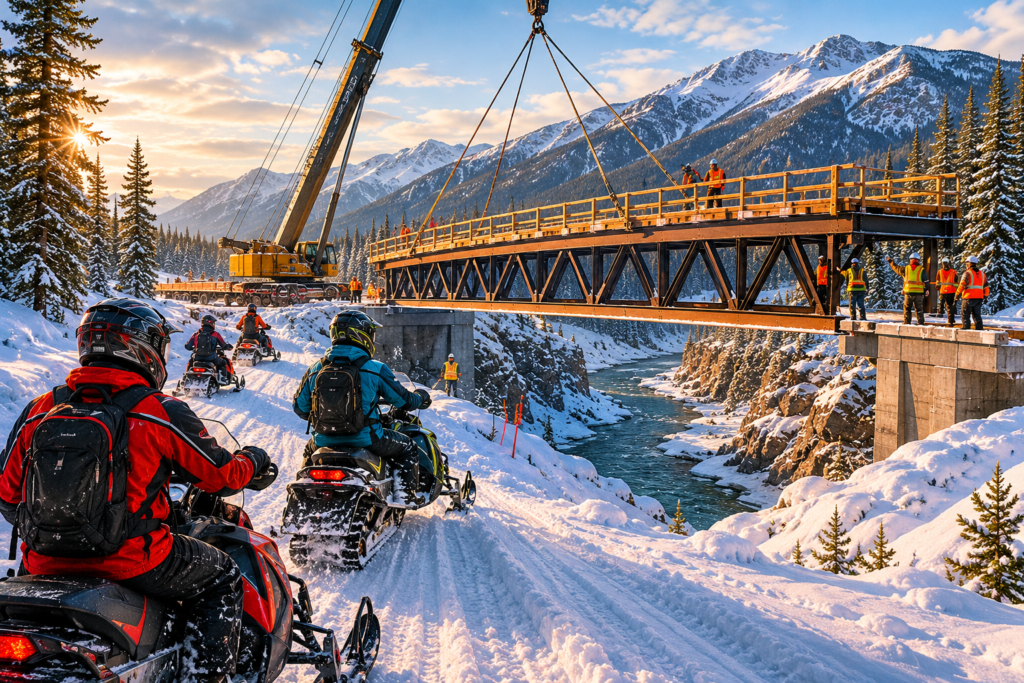 Illustration created using OpenAI
In northern BC, nearly $400,000 will support revitalization work on the Renshaw snowmobile trail system through the McBride Big Country Snowmobile Association. Funding will go toward construction of a new bridge that will restore access to the popular Renshaw riding area near McBride and the Robson Valley.
“The closing of the Renshaw trail and removal of the Kilometre 2 bridge was a devastating blow to the community of McBride, our snowmobile club and the sledders who ride the area,” said Rick Schafer, president of the McBride Big Country Snowmobile Association. “Being awarded the REDIP grant enables our club to take on one of the largest projects in the history of Recreation Sites & Trails BC, the building of a 140-foot clear span bridge.”
The province says the Outdoor Recreation Strategy is also tied to broader tourism and economic development goals under its Look West plan, which focuses on strengthening key sectors and helping communities build long-term economic resilience.
“BC’s internationally recognized Super, Natural British Columbia brand is grounded in our world-class outdoor experiences, which are essential to driving economic growth, supporting local businesses and jobs, and showcasing our natural advantages through our recreation industries,” said Anne Kang, Minister of Tourism, Arts, Culture and Sport. “Aligned with our Tourism Sector Action Plan, this strategy will help communities to diversify their economies, draw visitors, and build long-term resilience.”
The province notes that outdoor recreation currently represents approximately 1.5 per cent of BC’s real GDP. Since 2017, approximately $200 million has been invested into campground expansions, accessibility upgrades and improvements to trails, parking and recreation facilities across the province.
British Columbia is home to more than 1,000 provincial parks, recreation areas, conservancies, ecological reserves and protected areas, along with more than 2,000 recreation sites and trails.