
From salmonberries glowing along a coastal trail to huckleberries ripening on an Interior mountainside, wild berries are among British Columbia’s most appealing seasonal foods. They can also offer an enjoyable way to slow down, observe the landscape and learn more about the ecosystems around us.
Successful foraging, however, involves much more than finding something colourful enough to eat. Pickers need to identify plants with certainty, understand where harvesting is permitted and remember that berries are an important food source for wildlife.
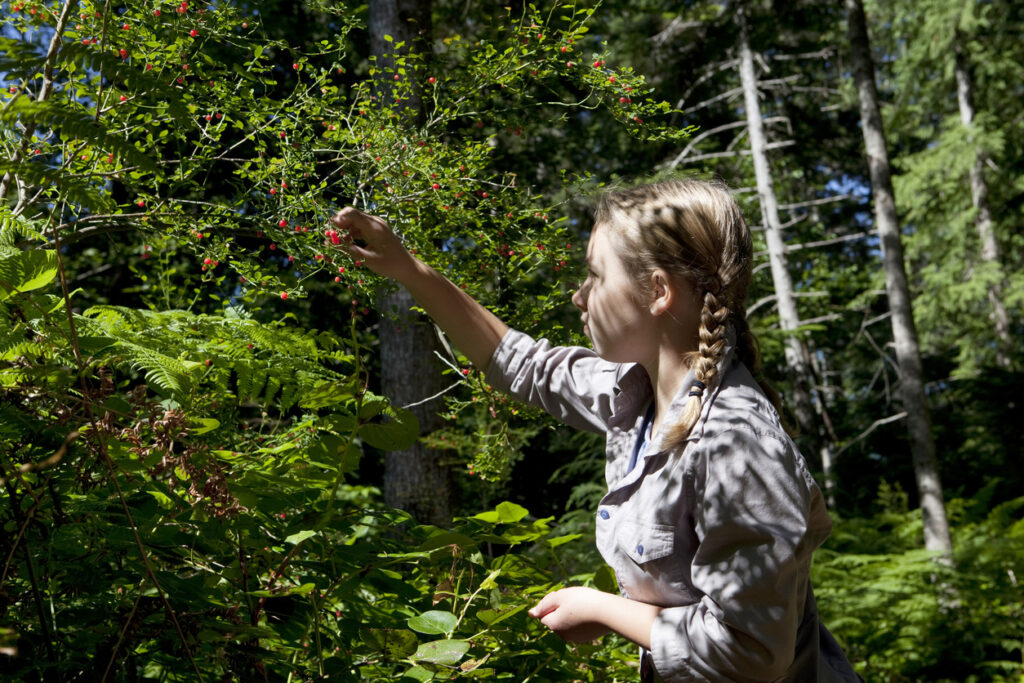 Photo by iStock
When Is Berry Season In BC?
BC’s wild-berry season generally begins in late spring or early summer and continues into early fall. Exact timing varies considerably according to latitude, elevation, weather and local growing conditions.
A coastal salmonberry may be ripe in June, while a high-elevation huckleberry patch in the Interior might not reach its peak until August or September. Warm, exposed sites usually produce fruit earlier than shaded forests and mountain slopes.
Rather than relying exclusively on a calendar, look for berries that have reached their mature colour, detach easily and appear plump and undamaged. A berry that resists being picked may need more time.
Wild Berries To Look For
British Columbia supports many native berry-producing plants. The following are some of the more recognizable edible species, but written descriptions should never replace a reputable field guide or instruction from an experienced local forager.
Salmonberry
One of the earliest berries to ripen along the coast, salmonberry grows in moist forests, streamside areas and other damp places. Its raspberry-like fruit ranges from yellow and orange to deep red.
The flavour varies from plant to plant. Some berries are juicy and sweet, while others are mild or slightly tart. The shrub can grow several metres tall and has three-part leaves, pink spring flowers and stems with small prickles and papery bark. Sierra Club BC’s EcoMap provides additional identifying information.
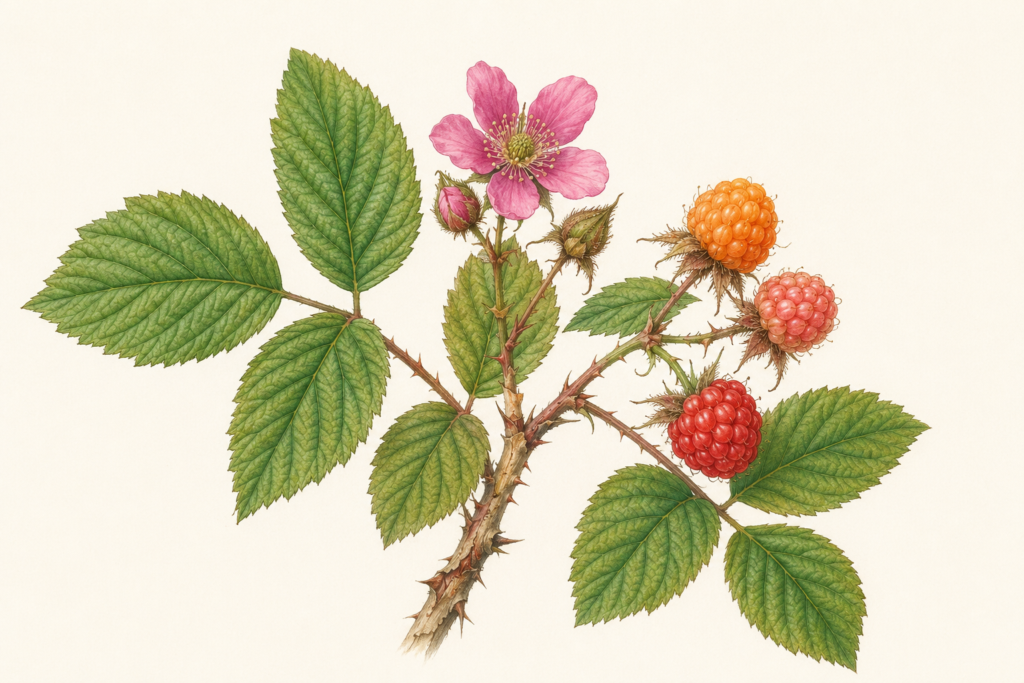 Illustration Created Using OpenAI
Thimbleberry
Thimbleberries are soft, bright-red fruits shaped somewhat like shallow raspberries. Their large, maple-like leaves and broad white flowers can help distinguish the plant.
Because the ripe fruit is exceptionally delicate, it often collapses into the picker’s hand. Thimbleberries are best eaten immediately or collected carefully in a shallow container. They grow in many parts of BC, particularly in forest openings, along trails and on disturbed ground.
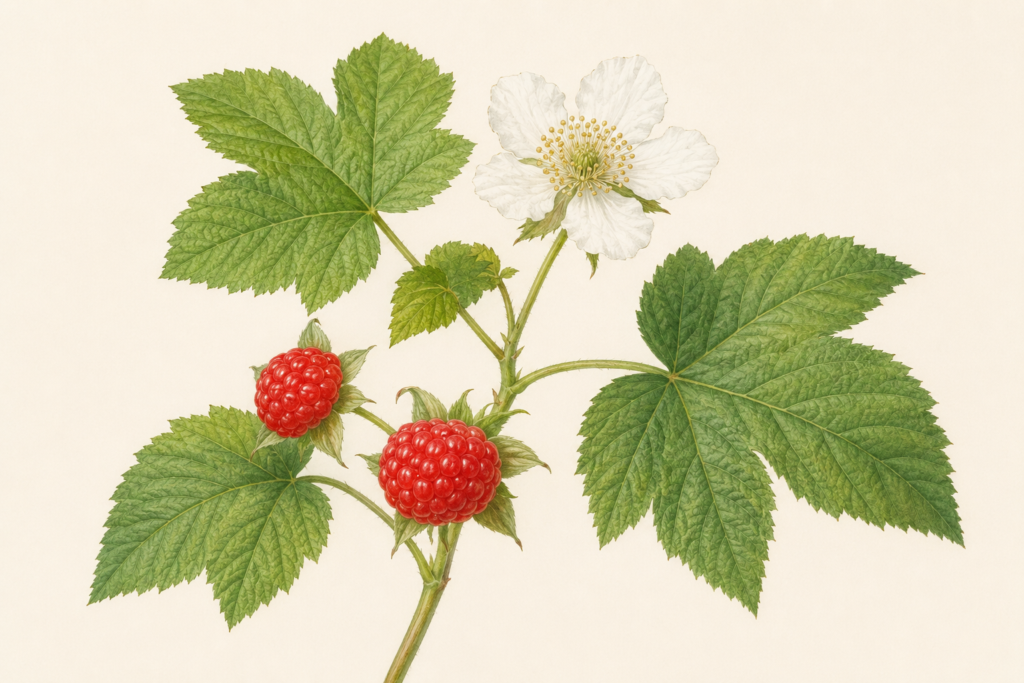 Illustration Created Using OpenAI
Wild Raspberries & Blackcaps
Several members of the Rubus genus grow in BC, including wild red raspberries and blackcap raspberries. Like their cultivated relatives, the aggregate fruits are made up of many small sections and separate from the plant’s central core when picked.
Wild raspberries favour openings, roadsides, clearings and the edges of forests. Blackcaps mature to a dark purple-black and may have a pale bloom on their surface.
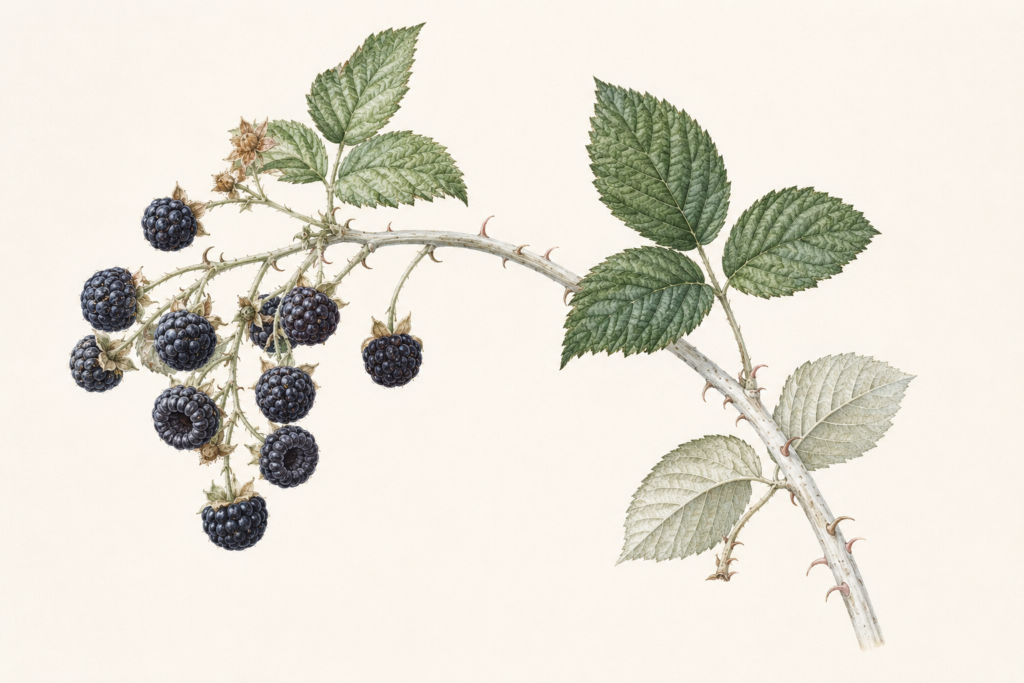 Illustration Created Using OpenAI
Huckleberries
“Huckleberry” is a common name applied to several related species in BC. Depending on the species and location, the fruit may be red, blue, purple or nearly black.
Red huckleberries are characteristic of moist coastal forests and are often seen growing on or near decaying wood. Black huckleberries are especially prized in the Interior and mountain regions. Their intensely flavoured fruit is excellent fresh and can also be used in baking, preserves and sauces.
Huckleberries are particularly important food for bears. Research in southeastern BC has identified them as a major grizzly bear food, making restraint and wildlife awareness essential in productive patches. The province has also imposed localized restrictions on commercial-scale huckleberry harvesting in parts of the Kootenay Boundary Region to protect important grizzly habitat. Pickers should check current regional orders before heading out.
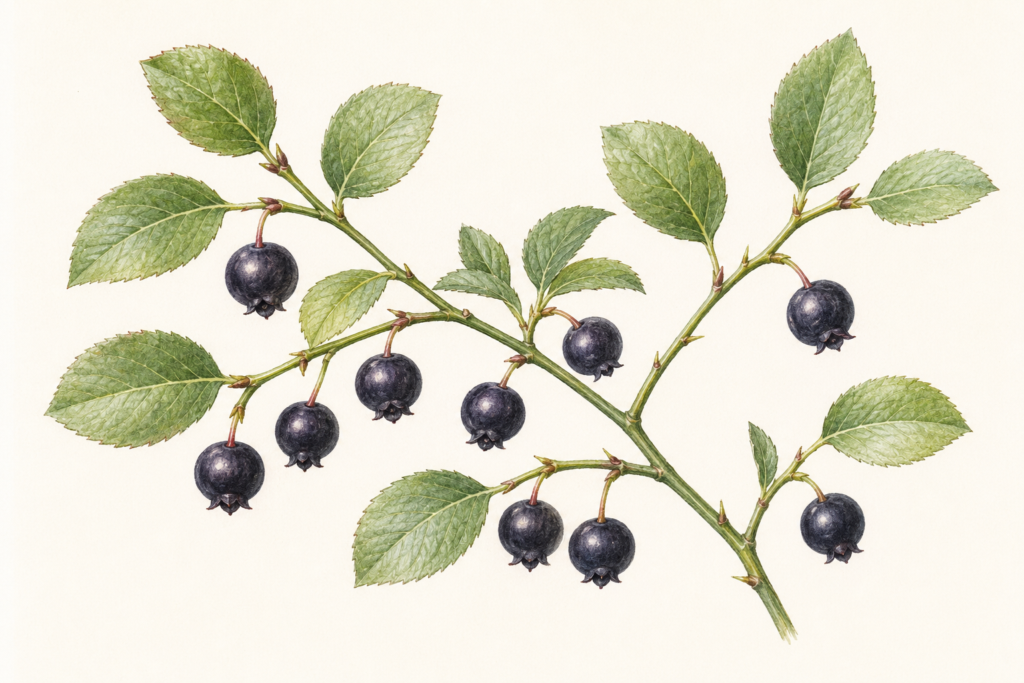 Illustration Created Using OpenAI
Saskatoon Berries
Common in dry, open forests, slopes and grassland environments, Saskatoon shrubs produce purple to almost black fruit resembling small blueberries. The berries have a sweet, slightly nutty flavour, although their texture and sweetness vary.
Saskatoons are particularly associated with the Interior, but their range extends through much of the province. They can be eaten fresh or used in pies, jams and other preserves.
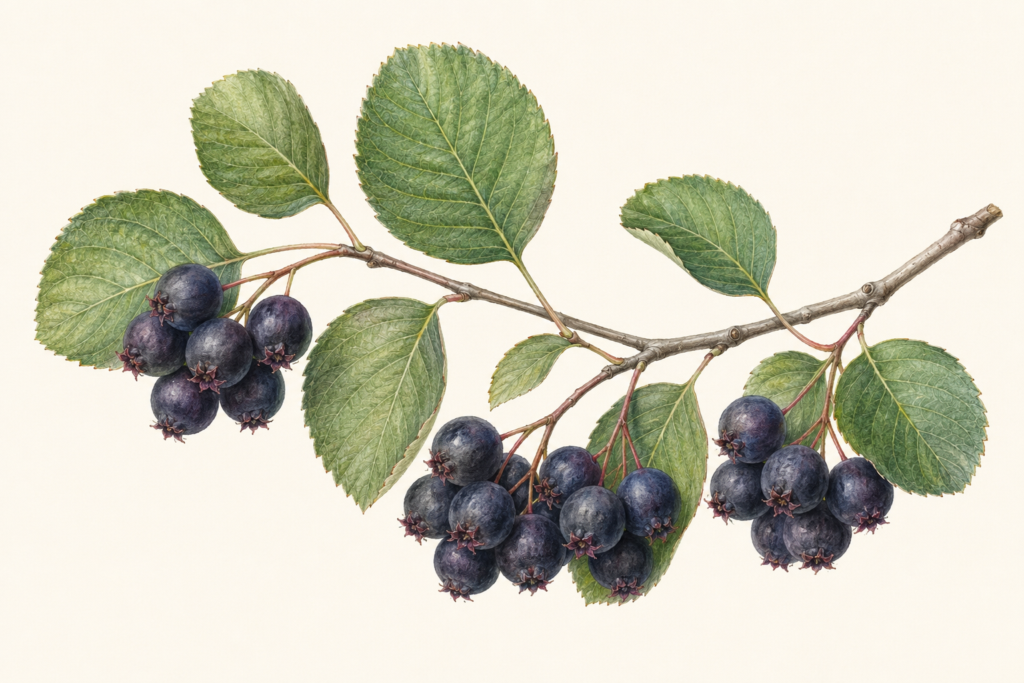 Illustration Created Using OpenAI
Salal Berries
Anyone who has walked through a coastal BC forest has probably encountered salal. This sturdy evergreen shrub has leathery leaves and dark blue-purple berries that grow in clusters.
Ripe salal berries are sweet but can have a dense or slightly fuzzy texture. They work well in jam and fruit leather, and their natural pectin makes them useful when combined with juicier fruit. Salal has long been an important food for Indigenous Peoples on the coast, where berries have traditionally been eaten fresh, dried or prepared in berry cakes.
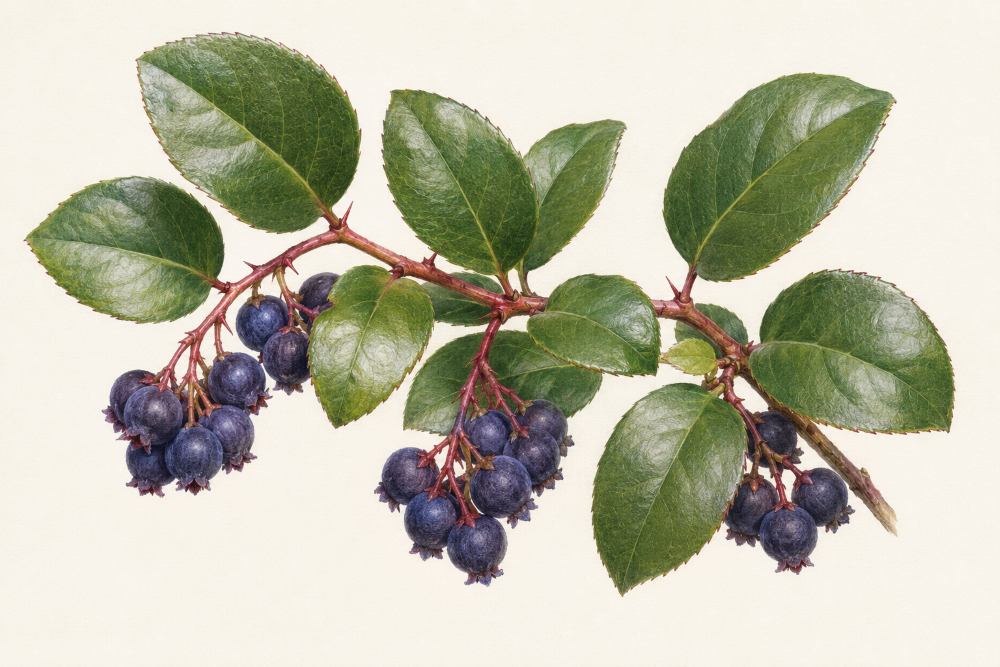 Illustration Created Using OpenAI
Oregon Grape
Despite its name, Oregon grape is not a true grape. Its evergreen, holly-like leaves, yellow flowers and dusty blue berries make it fairly distinctive.
The berries are edible but very tart. They are generally more enjoyable cooked with sugar or combined with sweeter fruit in jelly or preserves. Different Oregon grape species occur in coastal and Interior environments.
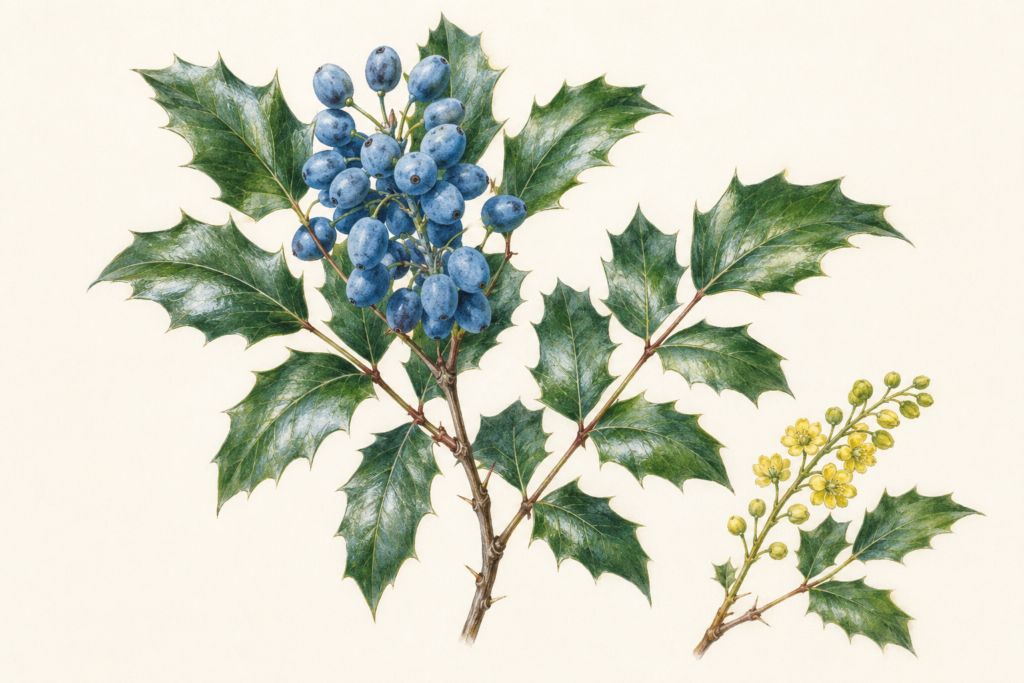 Illustration Created Using OpenAI
Soapberries
Soapberry, also called soopolallie or buffaloberry, grows in many parts of the Interior. The translucent red or orange-red berries are bitter and contain natural compounds that allow them to be whipped into a foam.
The plant and its fruit hold deep cultural importance for numerous Indigenous communities. Traditional preparation methods and harvesting knowledge belong to distinct cultures and should be learned from appropriate Indigenous sources rather than treated as a novelty or generalized “wilderness” technique.
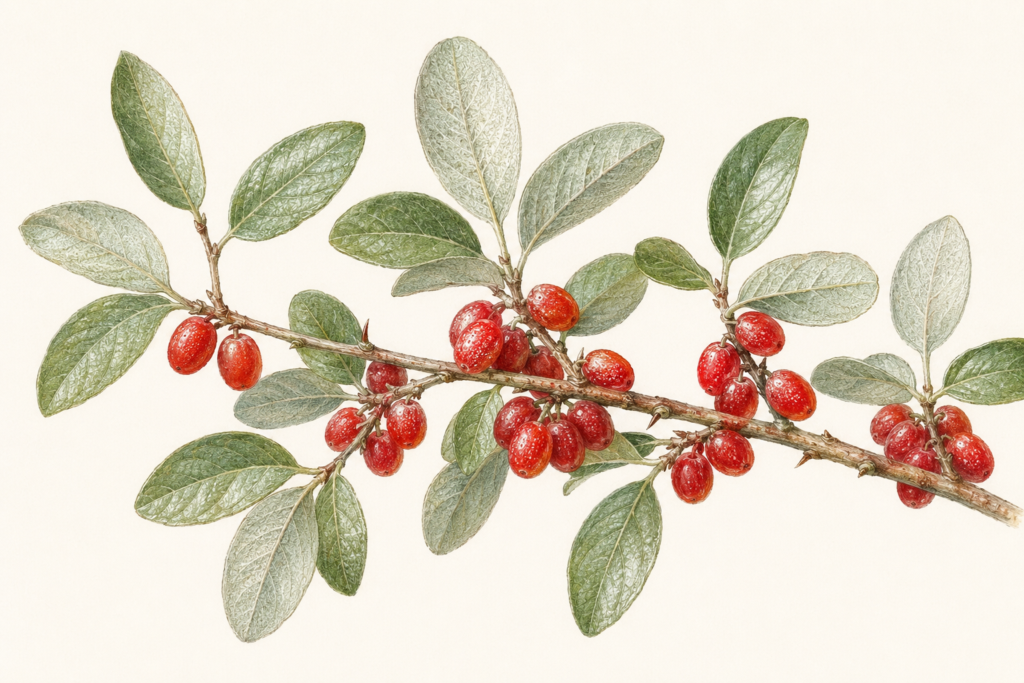 Illustration Created Using OpenAI
Never Eat A Berry You Cannot Positively Identify
Colour alone does not indicate whether a fruit is safe. BC is home to poisonous berry-producing plants, and some can grow close to edible species.
Devil’s club, for example, produces conspicuous clusters of red berries that are poisonous to humans. Queen’s cup produces an attractive single blue berry that is also poisonous.
Other plants of concern include baneberry and some honeysuckles. Even familiar-sounding plants require caution: elderberries, for instance, should not be treated as universally safe to eat raw because species, ripeness and preparation matter.
Use a current regional field guide and examine the entire plant, including its leaves, stems, growth pattern and habitat. Smartphone identification apps can offer clues, but they are not reliable enough to determine whether something should be eaten. If any doubt remains, leave the berry on the plant.
Know Where Picking Is Permitted
Finding an edible plant does not automatically give someone the right to harvest it.
In BC provincial parks, removing natural objects – including berries – is generally illegal. Harvesting is reserved for First Nations exercising recognized rights and people with specific authorization.
Rules can also apply in national parks, ecological reserves, conservation lands, regional parks and locally protected areas. On private property, permission from the landowner is required. Some Crown land may be open to personal harvesting, but access restrictions, Indigenous cultural values and localized closures must still be respected.
Check the rules for the precise location rather than assuming that all public land is open for foraging.
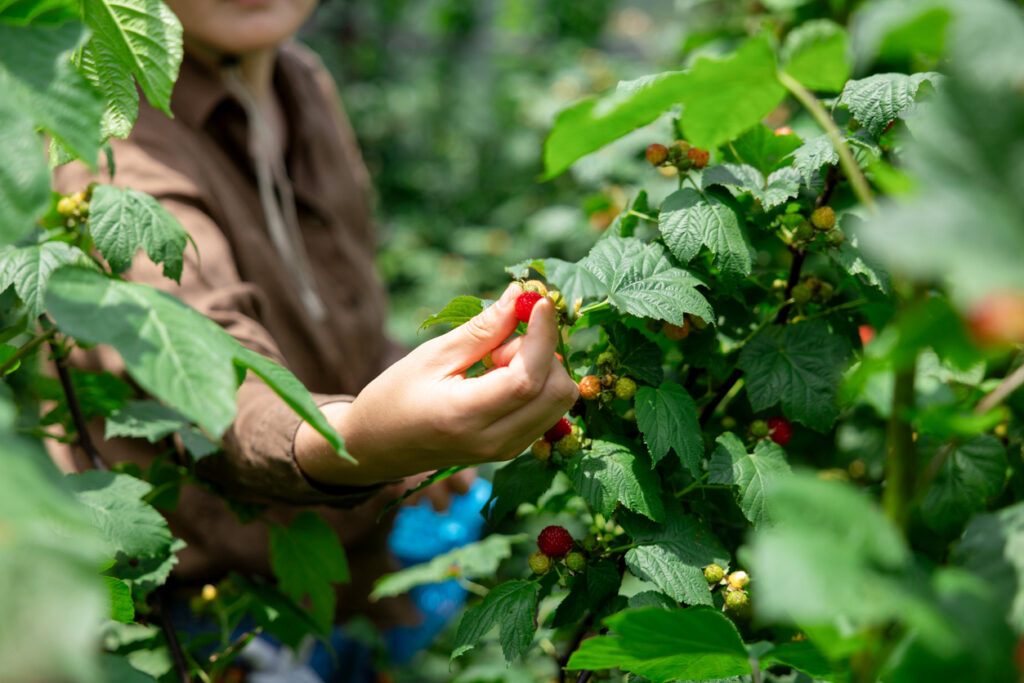 Photo by iStock
Pick Lightly & Leave Plenty Behind
A productive berry patch is not an outdoor supermarket. Its fruit feeds birds, bears and numerous other animals, while the plants themselves form part of a larger ecological community.
Responsible pickers should:
- Take only a small amount for personal use.
- Spread picking across several plants instead of stripping one shrub.
- Leave underripe and overripe fruit in place.
- Pick by hand and avoid damaging branches, leaves or roots.
- Avoid trampling surrounding vegetation.
- Never use rakes or mechanical devices that can damage plants.
- Leave especially small or sparse patches untouched.
- Respect areas of cultural importance to Indigenous communities.
- Avoid publicizing the exact location of sensitive or heavily used patches.
Be Bear Aware
Humans are not the only animals watching for ripe fruit. Bears often feed in berry patches during late summer and fall, sometimes becoming so focused on eating that they are less aware of approaching people.
Make noise when approaching dense vegetation or entering a patch, travel in a group when possible, keep children close and watch for fresh scat, tracks and recently disturbed plants. Keep dogs leashed.
Carry bear spray where it can be reached immediately – not buried in a backpack – and know how to use it. If you encounter fresh bear signs or see a bear using the patch, leave the area. Never crowd or displace a feeding animal. Parks Canada advises people to make their presence known around berry bushes and to back away rather than run during a bear encounter.
From Patch To Kitchen
Collect berries in clean, food-safe containers. Shallow, rigid containers are preferable for delicate fruit because deep buckets can crush the bottom layers.
Discard mouldy, damaged or contaminated berries. Avoid harvesting close to busy roads, industrial sites, old mine workings or areas that may have been sprayed with herbicide. Berries at a comfortable picking height are also less likely to have been contaminated by animals than fruit growing close to the ground.
Wash your hands and rinse berries under cool running water shortly before eating or preparing them. Fresh produce can carry harmful microorganisms through contact with soil, water, wildlife or handling.
Refrigerate fresh berries promptly. For longer storage, arrange dry berries in a single layer on a tray, freeze them and then transfer them to freezer-safe containers. This prevents them from freezing into one solid mass.
Wild berries can turn an ordinary walk into a closer encounter with BC’s landscapes – but the best foraging trips are measured by more than the contents of a basket. Careful identification, light harvesting and respect for wildlife ensure the patch remains productive long after the picker has gone home.