
A short walk to a waterfall may not feel like a backcountry expedition. The trail is popular, the forecast looks favourable and the parking lot is only a few kilometres away. What could go wrong?
In British Columbia, conditions can change quickly. Rain can make a trail difficult to follow, an injury can turn an hour-long outing into an overnight wait and an early wrong turn can place a hiker surprisingly far from the trailhead. Mountain weather, wildfire activity, wildlife encounters and large areas without cellular coverage add to the uncertainty.
That does not mean every hiker needs to carry an expedition-sized pack. It does mean that anyone heading onto a trail should be prepared to remain outside longer than planned.
 Photo by iStock
The Essentials That Belong On Every Hike
AdventureSmart recommends carrying 10 basic survival items on any outdoor excursion, whether it lasts a few hours or several days. The quantities and equipment can be adjusted for the trail, season and expected conditions, but the fundamental categories remain the same.
Navigation and communication aids: Carry a map and compass – and know how to use them. A phone or handheld GPS can provide additional navigational help, but electronics should not be the only option available. On remote or more demanding trips, consider carrying a satellite communication device or personal locator beacon.
A flashlight or headlamp: Darkness can arrive before an injured, delayed or disoriented hiker reaches the trailhead. A headlamp keeps both hands free and is generally more useful than a phone flashlight. Pack spare batteries or ensure the light is fully charged.
A fire-making kit: Waterproof matches, a lighter and an appropriate fire starter can provide heat in a genuine survival emergency. However, hikers must follow all fire prohibitions and exercise extreme caution, particularly during BC’s wildfire season. A fire should never be treated as a substitute for proper clothing and shelter.
A signalling device: A whistle carries farther than a human voice and requires less energy. Three blasts are commonly used as a distress signal. A signal mirror can also attract attention in open terrain.
Extra food and water: Bring more than the hike should require. High-energy foods that do not need cooking – such as trail mix, energy bars or dried fruit – are practical emergency supplies. For longer routes, carry a water filter or another reliable treatment method rather than assuming backcountry water is safe to drink.
Extra clothing: Pack for the conditions hikers may encounter, not simply those present at the trailhead. A lightweight insulating layer and waterproof shell can make an enormous difference if temperatures fall or rain begins. In cooler conditions, include a toque and gloves. Clothing made from wool or synthetic materials will generally insulate better when damp than cotton.
A first aid kit: The kit should be appropriate for the size of the group and length of the trip. At minimum, it should contain supplies for cleaning and covering wounds, managing blisters and supporting a minor injury. Personal medications – including an epinephrine auto-injector, when prescribed – should be readily accessible.
An emergency shelter: A reflective emergency blanket, bivy sack or lightweight tarp can reduce exposure to wind and rain. These items weigh very little but can become critical when an injury prevents someone from continuing.
A pocketknife or multi-tool: A small cutting tool can assist with equipment repairs, first aid and shelter preparation.
Sun protection: Sunglasses, sunscreen and a brimmed hat are valuable even when the day begins cloudy. Sun exposure can be particularly intense at elevation and when reflected from snow.
BC Parks includes these supplies among the items worth carrying on any park visit and cautions hikers not to rely exclusively on a cellphone because many areas lack reception. BC Parks and AdventureSmart provide detailed outdoor-safety guidance.
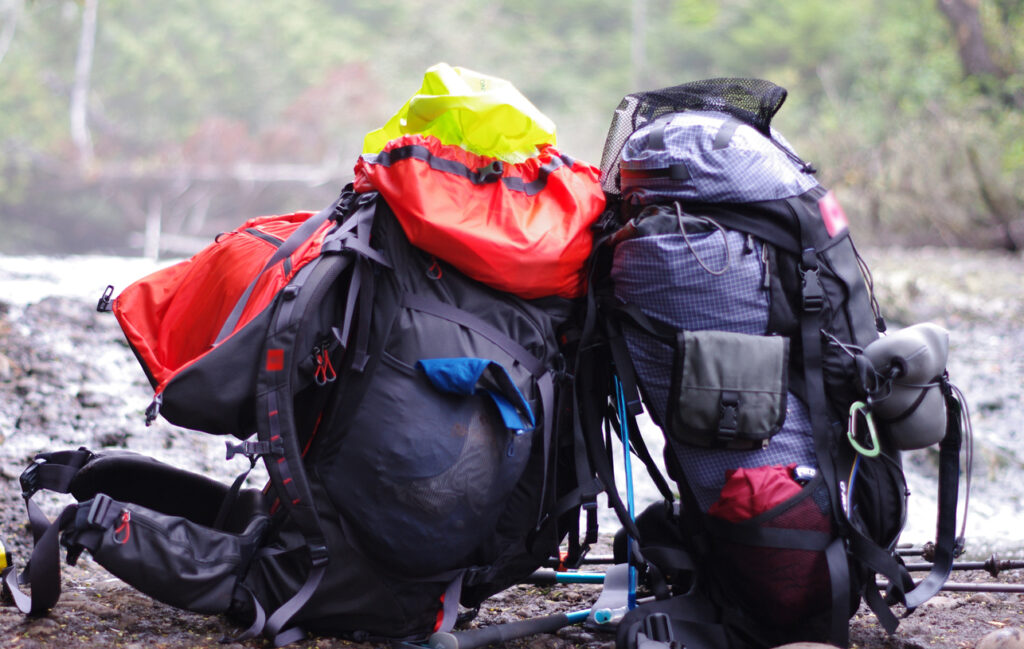 Photo by iStock
Add Equipment For The Route & Conditions
The essentials are a starting point, not a complete packing list for every trail. Appropriate footwear, wool or synthetic socks, insect repellent and blister treatment can make even an easy outing safer and more comfortable. Trekking poles may help on steep or uneven ground.
In bear country, carry bear spray, know how to use it and keep it immediately accessible – not buried at the bottom of a backpack. Hikers should also learn the recommended response to encounters with bears, cougars and other wildlife before entering their habitat. BC Parks’ wildlife guidance recommends carrying bear spray where it can be reached quickly.
Long, remote or technically difficult routes require additional preparation. Depending on the season and terrain, that may include traction devices, avalanche equipment and training, a larger first aid kit, more substantial shelter, additional water treatment, repair supplies and a satellite communication device. Group equipment should be distributed so one lost pack does not leave everyone without essential gear.
Your Phone’s GPS May Still Work Without Cell Service
A common misconception is that a smartphone cannot determine its location once it loses cellular service. In fact, the GPS receiver in a phone can receive signals directly from navigation satellites. It does not need a cell tower to calculate the phone’s position.
Cellular and Wi-Fi connections can help a phone establish its location faster, but they are not the same thing as GPS. In many cases, a phone can continue showing the user’s location while it is in airplane mode or outside cellular coverage.
There is an important catch: GPS location and map data are separate.
Your phone may know exactly where it is, but the mapping app may be unable to display the surrounding roads, trails or topographic details if those files normally come from the internet. Before leaving home, download an offline map that covers the entire route and a generous area around it. Open the map while offline and confirm that the trail, terrain and location marker appear properly. Apple, for example, allows compatible devices to download map areas for offline use, while several dedicated outdoor-navigation apps offer downloadable topographic maps.
Save the route, trailhead and important waypoints in advance. A screenshot can preserve basic information, but it cannot show a changing location or provide the detail of a proper offline map.
Phone batteries also drain more quickly in cold weather and when the device is continually searching for a cellular connection. Begin with a full charge, carry a power bank and charging cable, reduce screen use and consider using airplane mode when appropriate. Keep the phone warm and protected from moisture.
Tree cover, cliffs and narrow valleys may reduce GPS accuracy or make it take longer to establish a position. A phone is an excellent navigational aid, but it is not infallible – and it cannot usually call or message for help without cellular, Wi-Fi or compatible satellite service.
 Photo by iStock
Leave A Trip Plan Before Leaving Home
Equipment is only part of hiking safely. Before setting out, check the weather, trail conditions, park advisories, wildfire activity and expected daylight. Choose a route suitable for the group’s fitness, skills and experience.
Tell a reliable person where you are going, which route you intend to take, who is with you, what vehicle you are using and when you expect to return. Establish a specific time at which that person should seek help if you have not checked in. AdventureSmart’s trip-planning guidance explains the information rescuers may use to locate an overdue group.
If an emergency occurs and communication is available, call 911. Do not delay seeking help because of concern about the cost of rescue. Provide your location as precisely as possible, describe the problem and follow the dispatcher’s instructions.
The contents of a hiking pack should change with the distance, season and difficulty of the route. The need to carry basic survival equipment should not. A few carefully chosen items can turn an uncomfortable delay into a manageable one – and give search-and-rescue personnel a much better opportunity to bring everyone home safely.